Croatia is much more than just its beaches; it also offers inland cities, mountain ranges, breathtaking waterfalls, Venetian fortresses, national parks, and a cuisine that varies greatly from one region to another.
We traveled along the entire coastline as well as through the inland regions. Based on our travels, we’ve put together this selection of the best things to do in Croatia—ranging from cultural sites to nature and local experiences—to help you plan your itinerary.
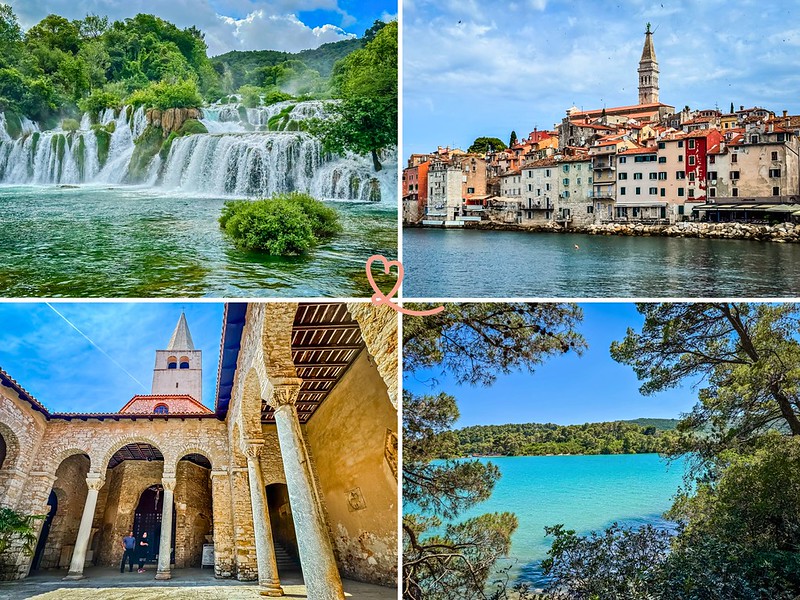
This opinion is completely independent, based on our experiences. We made our own choices, visited the area anonymously, and paid our bills in full.
1. Explore major cities
In Croatia, each major city tells a different story. On the Adriatic coast, several of them still have historic centers protected by city walls, a legacy of Venetian rule, while inland, the capital has a more Central European atmosphere, reminiscent of Vienna or Budapest.
We especially love the way these cities blend cobblestone streets, café terraces, and bustling early-morning markets. The historic districts are easy to explore on foot.
See our article on the most beautiful cities
Dubrovnik

Dubrovnik, surrounded by its medieval ramparts overlooking the Adriatic Sea, is a must-see on the Dalmatian coast. A walk along the entire length of the ramparts offers a panoramic view of the orange-tiled rooftops and the sea—a walk we recommend taking early in the morning to avoid the heat.
See the best attractions.
Split

Split, built in part within the walls of Diocletian’s Palace, blends Roman ruins with everyday life. Getting lost in its narrow streets remains one of the most enjoyable ways to understand how a city has managed to integrate its ancient past into its present-day life.
See the best attractions.
Zadar

Zadar, known for its sea organ and its waterfront overlooking the sunset. Alfred Hitchcock is said to have called this sunset the most beautiful in the world—a reputation that draws many visitors to the promenade every evening.
See the best attractions.
Zagreb

Zagreb, a continental capital with Austro-Hungarian charm, nestled between Dolac Market and the Neo-Gothic cathedral. The city can be explored just as easily on foot as by funicular—one of the shortest in the world—which connects the Upper Town to the Lower Town in just a few dozen seconds.
Pula

Pula, home to one of the best-preserved Roman amphitheaters in Europe. Attending a concert or festival in this arena offers a unique experience, thanks to its natural acoustics and historic setting.
See the best attractions.
2. Explore small towns
Croatia’s small coastal towns are distinguished by a more human scale than that of large tourist cities. Most are built on a peninsula or a former islet connected to the mainland by a causeway, giving them a compact layout centered around a bell tower or a fortress.
We love to take a walk there in the early morning, before the tour groups arrive. The pale stone of the facades, polished by centuries of use, reflects the late-afternoon light in a special way.
See our article on the most beautiful cities
Trogir

Trogir, a medieval town perched on a small islet between the mainland and the island of Čiovo, is a UNESCO World Heritage Site for its historic center. You can explore its old town in an hour or two, making it an easy stop to fit in between Split and the neighboring islands.
Omis

Omiš, nestled at the mouth of the Cetina River, is known for its gorges and its former pirate hideout. The town is also an excellent starting point for water activities offered on the nearby river.
Porec

Poreč, in Istria, where Roman alleyways and Venetian facades blend together along the coast. The seaside promenade, lined with terraces, is the perfect spot for a late-afternoon break after visiting the nearby basilica.
See more photos.
Rovinj

Rovinj, a town with colorful houses clustered around a bell tower, is considered one of the most photogenic towns in Istria. The climb up to St. Euphemia’s Church is well worth the effort, offering a panoramic view of the rooftops and surrounding islets.
3. Explore the national parks (Plitvice, Krka, etc.)
Inland, Croatia has several national parks centered around karst landscapes, cascading lakes, or limestone canyons. Wooden walkways often allow visitors to get as close as possible to the water—sometimes directly above the waterfalls—offering a fully immersive experience without requiring a high level of physical fitness. We recommend arriving early in the morning, as soon as the park opens, to avoid the crowds that build up by midday during the high season.
Plitvice National Park

Plitvice Lakes National Park, consisting of 16 turquoise lakes connected by waterfalls and wooden walkways. Allow at least half a day to explore the main trails, and more if you’d like to take the boat that crosses the largest of the lakes.
See all our tips.
Krka National Park

Krka National Park, known for its Skradinski Buk waterfalls, where swimming was once allowed. The visit is nicely rounded out by a boat trip to the Orthodox monastery of Visovac, perched on a small island in the middle of the river.
Paklenica National Park

Paklenica National Park, consisting of two limestone canyons popular for hiking and rock climbing. Climbers will find equipped routes of all difficulty levels, while hikers can enjoy shaded trails even in the height of summer.
4. Don’t miss the island national parks
Some Croatian islands are designated as national parks, which restricts construction and preserves a landscape that remains largely unspoiled. They are accessible only by boat, often from a nearby port on the mainland or a larger island. Mediterranean vegetation—pine trees, scrubland, and sometimes old vineyards—covers most of the land, while the coastline alternates between rocky coves and small bays. We recommend setting aside a full day for each of these islands, as the boat trip significantly reduces the actual time available for exploring once you arrive.
Mljet

Mljet, largely covered in forests and home to two saltwater lakes connected to the sea, one of which features an ancient Benedictine monastery on a small islet. Cycling around the lake before taking a boat across to the monastery remains one of the island’s most popular activities.
Brijuni

Brijuni, an archipelago off the coast of Istria, known for its wildlife park and Roman ruins. Visitors typically tour the area by a small tourist train, which allows them to see the main attractions on the main island in half a day.
Kornati

Kornati, an archipelago of rocky, arid islets, renowned for sailing and diving. A day trip from Murter or Zadar allows you to explore several of these islets, often including a stop for a swim in a secluded cove.
5. Cross over to the large islands
The major Croatian islands can be reached by ferry or catamaran from the main ports along the coast, with crossings ranging from 30 minutes to over 2 hours depending on the destination. Each island retains a distinct identity, shaped by its terrain, history, or local economy—whether it be vineyards, sheep farming, or beach tourism.
We recommend booking ferry tickets in advance during peak season, as the most popular crossings sell out several days before departure.
See our selection of the most beautiful islands in Croatia.
Hvar

Hvar, renowned for its nightlife and lavender fields, features a town of the same name dominated by a Venetian fortress, as well as other charming villages. The Pakleni Islands, just a few minutes away by water taxi, offer quieter coves for those looking to get away from the hustle and bustle of the harbor.
Korčula

Korčula, a fortified town that local tradition holds to be the birthplace of Marco Polo. Its fishbone-shaped layout, designed to shield the town from wind and heat, is a pleasure to explore on a stroll with no set route.
Its old town is full of charm. We loved wandering around there.
Brač

Brač, known for its white stone—used in many European monuments—and for Zlatni Rat Beach. The island’s interior, which is drier and more mountainous, is also ideal for hiking to the summit of Vidova Gora, the highest peak in the Adriatic islands. It offers beautiful contrasts!
Screw

Vis, which was long closed to tourism for military reasons, remains one of the least developed islands in the Adriatic. This relative obscurity now makes it a favorite destination for travelers seeking authenticity and tranquility.
Krk

Krk is connected to the mainland by a bridge and can be reached by car without taking a ferry. Its size makes it possible to combine beaches, traditional villages, and small backcountry roads all in a single day.
Pag

Pag, famous for its sheep’s-milk cheese and the nightlife at Zrće Beach. We especially loved the lunar landscape of its interior, shaped by the bora, because it stands in stark contrast to the rest of the Dalmatian coast.
6. Take a boat ride
There are many boat tours that allow you to explore the Croatian coastline from the sea, a perspective that completely changes how you see the cliffs and sea caves. Some caves are only accessible at certain times of day, when sunlight enters at a specific angle and casts a unique hue on the water.
The Blue Caves

In several places throughout Croatia, you can explore the Blue Caves, where light streaming through an underwater opening gives the water an intense blue color. The phenomenon lasts only a few hours around midday, which explains why so many boats flock there at that exact time.
For example, on the island of Biševo, or at Ulysses’ Cave on Miljet.
There are boat tours from Split, Hvar, and Dubrovnik— see the options.
Blue Lagoon

However, to the best of our knowledge, there is only one Blue Lagoon: a cove with shallow, turquoise waters, often visited in combination with the island of Drvenik Mali. Its shallow depth makes for peaceful swimming, suitable for both children and less experienced swimmers.
See the boat tours.
7. Enjoy the beaches
The Croatian coastline features a wide variety of beaches, ranging from fine pebbles to rocky outcrops and a few sandy stretches. Many of them change shape over the course of the seasons due to ocean currents, which explains why some images seen online may not always reflect the actual conditions at the time of your visit.
We recommend bringing water shoes, as the pebbles and rocks can make swimming uncomfortable if you’re barefoot.
Beaches Surrounded by Nature

Croatia’s beaches are all very similar. They often consist of small gravel or pebbles, sometimes sand, with green hills and turquoise water.
The best known is Zlatni Rat, on the island of Brač—a tongue of pebbles whose tip changes shape depending on the currents. Seen from the surrounding hills, its elongated silhouette is one of the most recognizable images of the Croatian coast.
Urban beaches

You’ll also find plenty of city beaches that combine turquoise waters with historic architecture.
Among the best known is Banje in Dubrovnik, which offers a direct view of the city walls and the Old Town. Its close proximity to the historic center makes it a convenient option for a quick dip between sightseeing stops.
8. Explore the forts and city walls
Croatia is home to a large number of fortifications, built over the centuries to protect against Ottoman invasions or to assert Venetian control over the Adriatic coast. Some are situated on high ground, offering sweeping views of the city or bay they once guarded. We find that visiting these sites provides a better understanding of the region’s turbulent history, marked by centuries of rivalries among regional powers.
Klis Fortress

Klis, a fortress perched above Split, withstood several Ottoman sieges in the 16th century. The site has also served as the backdrop for several scenes in *Game of Thrones*, which today attracts a wider audience than just history buffs.
Ston Wall

Ston, surrounded by one of the longest systems of city walls in Europe, was built to protect the nearby salt marshes. A walk along the entire length of the rampart walk—less crowded than the one in Dubrovnik—offers an unobstructed view of the bay and the surrounding hills.
Španjola Fort

Fort Spanjola, on the island of Hvar, overlooks the town and offers a sweeping view of the Pakleni Islands. The climb, which is fairly short from downtown, ends at one of the most beautiful viewpoints overlooking the harbor and the old town.
The City Walls of Dubrovnik

The Dubrovnik City Walls, which completely encircle the Old Town for nearly 2 km and can be explored on foot. Walking along this rampart at the beginning or end of the day remains one of the most memorable experiences of the trip, with the views changing at every turn.
9. Admire cathedrals and religious sites
Croatia’s religious heritage reflects a succession of influences: Byzantine on the Istrian coast, Romanesque and Gothic in Dalmatia, and then Baroque beginning in the 17th century. The oldest buildings often feature mosaics or decorative elements dating back to the Byzantine Empire, while Dalmatian cathedrals blend Venetian influences with local traditions. We particularly appreciate the carved facades of certain cathedrals, which feature biblical scenes created by local medieval masters. Visiting these sites is generally free or inexpensive, except for access to certain bell towers or adjacent treasuries. We recommend checking the opening hours before you go, as some buildings close during religious services.
Euphrasian Basilica in Poreč

The Euphrasian Basilica in Poreč, adorned with 6th-century Byzantine mosaics, is a UNESCO World Heritage Site. Visitors can climb the adjacent bell tower for a view of the rooftops of the old town and the nearby sea.
St. Domnius Cathedral in Split

St. Domnius Cathedral in Split, housed in the former mausoleum of Emperor Diocletian, is considered one of the oldest cathedrals still in use in the world. Its bell tower, added several centuries after the cathedral was first built, offers one of the best views of Split’s historic center.
St. Lawrence Cathedral in Trogir
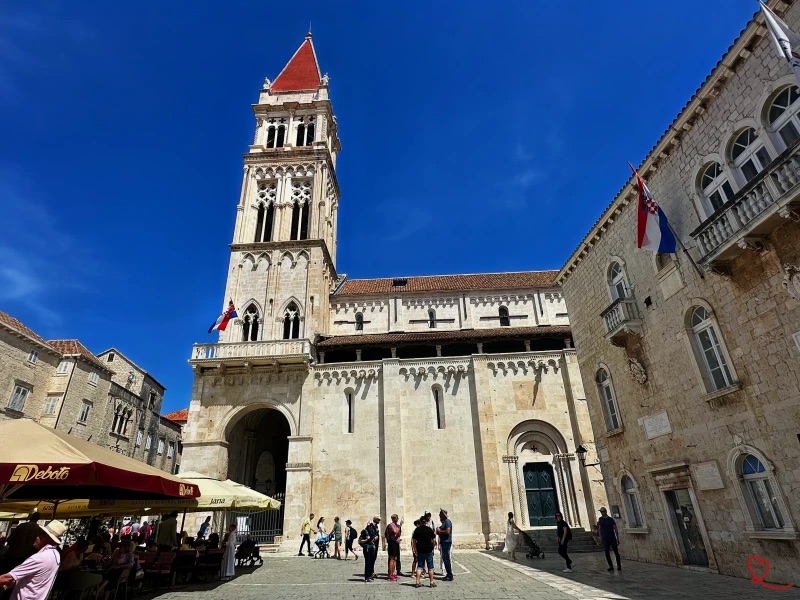
St. Lawrence Cathedral in Trogir, known for its Romanesque portal carved by Master Radovan. The details of this portal—ranging from biblical scenes to animal figures—are worth taking a few minutes to admire before entering.
10. Explore the castles
Unlike the coast, northern Croatia—particularly the Zagorje region—is home to the majority of the country’s castles. These structures, often built on a hill or along a river, belonged to local noble families who controlled the trade routes between Central Europe and the Adriatic. This region is less well-known to foreign visitors, making it a pleasant alternative to the more crowded sites along the coast.
Trakoscan Castle

Trakošćan Castle, surrounded by a landscaped park and an artificial lake, was built in the 19th century in the Neo-Gothic style. The interior features period furniture and a collection of weapons, while the park is perfect for a leisurely stroll around the lake.
Varaždin Castle

Varaždin Castle is a former medieval fortress that has been converted into a municipal museum, located in the heart of the historic city of the same name. The city, with its well-preserved Baroque facades, is a delightful complement to a visit to the castle.
Veliki Tabor Castle

Veliki Tabor Castle, a 15th-century pentagonal fortress, is perched on a hill in Zagorje. Its defensive architecture, which has remained largely intact, makes it one of the best-preserved examples of feudal fortifications in northern Croatia.
11. Enriching Yourself at Museums
Croatia is home to museums dedicated to a wide variety of periods and themes, ranging from contemporary art to Roman archaeology and 20th-century history. Zagreb is home to the majority of the country’s museums, while coastal cities mainly feature collections related to their maritime or religious history.

We find that certain themed museums—such as those dedicated to romantic relationships or optical illusions—offer a unique perspective that goes beyond more traditional collections.
Among our favorites:
- Museum of Croatian Naïve Art in Zagreb, dedicated to an artistic movement that flourished in the country during the 20th century. The works, often painted by self-taught artists from rural areas, offer a unique perspective on life in the Croatian countryside.
- The Museum of Broken Relationships in Zagreb displays items related to romantic breakups that have been sent in by visitors from around the world. The concept—as original as it is personal—makes it one of the most unusual museums in Europe.
- The Split Archaeological Museum, which houses collections from excavations in the region, including those from ancient Salona.
12. Explore the archaeological sites
The Roman Empire left a significant mark on the Croatian coast, particularly in Istria and Central Dalmatia, where several cities have preserved an urban layout dating back to antiquity. The best-preserved ruins are often found right in the city center, integrated into the modern urban landscape rather than isolated in a fenced-off archaeological site. We find this proximity particularly interesting, as it allows you to walk from a café terrace to Roman columns that are nearly two thousand years old without even crossing the street.
Pula Amphitheater

The Pula Amphitheater is one of the six largest Roman amphitheaters still standing and is now used for concerts and festivals. Descending into the basement, where stage sets and animals were once stored, provides a better understanding of how the building functioned.
Diocletian’s Palace, in Split

The Diocletian’s Palace in Split, a former imperial residence dating from the 4th century, whose walls still house shops and residences today. Strolling through its narrow streets, where modern shops and ancient ruins stand side by side, offers a rather rare glimpse of the continuity between past and present.
Salona

Salona, near Split, is home to the ruins of the ancient capital of the Roman province of Dalmatia. The site, which is less crowded than downtown Split, offers a more peaceful visit among the columns and thermal baths that are still visible.
13. Activities: kayaking, canyoning, hiking…
The Croatian hinterland, particularly around the Velebit and Cetina mountain ranges, offers a variety of outdoor activities off the beaten path of the coast. The gorges carved out by the rivers offer a landscape quite different from the coastline, with steep cliffs and denser vegetation. We tried several canyoning and kayaking trips, usually led by local guides who know the terrain and its seasonal variations well. We recommend booking these activities in advance during peak season, as groups fill up quickly for the most popular time slots.
Kayaking / Rafting

We recommend kayaking or rafting down the Cetina River near Omiš, through narrow gorges and under natural bridges. The route, suitable for both beginners and experienced paddlers, alternates between calm stretches and more fast-paced sections depending on the chosen difficulty level.
View rafting options

Canyoning
Canyoning in the Cetina or Zrmanja Gorges, featuring jumps and natural slides depending on the route you choose. The cool water of these rivers offers a welcome break on the hottest days of summer.
View canyoning options
Hiking

Many regions are ideal for hiking, with varying degrees of elevation gain.
For example, the Velebit Mountains are home to several marked trails and two nature parks. The views of the Adriatic from the ridges are among the most expansive along the entire Croatian coast.
Sea Kayaking (Day and Night)

From most Croatian seaside towns and islands, you can enjoy kayaking trips: to explore the coast, visit islands, or paddle into secluded coves or caves.
Some towns, such as Split, even offer nighttime kayaking tours with illuminations.
See kayaking options
14. Family Activities (Dalmatia Aquapark…)
Traveling with the family in Croatia is fairly straightforward, thanks to shallow beaches suitable for young children, short trails in some national parks, and generally well-developed tourist infrastructure along the coast. Several cities also offer activities designed for children, such as guided tours with costumed guides or workshops based on local legends.

- Aquapark Dalmatia, near Šibenik, is one of the largest water parks in the region, featuring several slides and pools. It’s a great way to spend a whole day when the heat makes other activities too difficult.
- Dolphin-watching trips at sea, designed for children curious about marine life. These excursions, led by guides committed to animal welfare, allow for respectful observation from the boat.
They are available from many cities, primarily in the northern half of the country.
See options.

- Cres’s griffon vultures, one of the last colonies in the region, can be observed from a local wildlife rescue center. The center also takes in injured birds, allowing visitors to observe them up close in complete safety.
- Lipik horses, associated with the historic breeding of Lipizzaners, a breed native to the region. The stud farm is open to visitors and occasionally offers dressage demonstrations, rooted in a centuries-old equestrian tradition.
- The Kuterevo bears live in a sanctuary that takes in orphaned or injured cubs from the Velebit Mountains. A visit to the sanctuary also raises visitors’ awareness about the coexistence of humans and this species, which is still present in Croatian forests.
15. Unusual Experiences
Beyond the typical sightseeing tours, Croatia offers several more unique experiences related to its military heritage, contemporary art installations, or its recent popularity as a film location. Here are a few examples:
Zadar’s Sea Organ

The Zadar Sea Organ, an installation that produces sounds through the movement of the waves beneath a stone staircase. Sitting on the steps at sunset, as the submerged pipes resonate, remains one of the city’s most cherished moments.
Military Tunnels in Vis

The military tunnels in Vis, built during the Yugoslav era to house submarines, are now open to visitors. The contrast between the darkness of the tunnels and the light from the bay at their exit adds to the appeal of this unique tour.
Game of Thrones Filming Locations
Tours of the “Game of Thrones” filming locations, primarily in Dubrovnik and the area around Split, where several scenes from the series were filmed. Some guides even offer to point out the sets and costumes used during filming.
And discover the local cuisine…
Croatian cuisine varies greatly from region to region, ranging from Italian and Venetian influences along the Istrian and Dalmatian coasts to traditions more closely aligned with those of Central Europe in the interior and the north of the country.

Along the coast, grilled fish, seafood, and local olive oil dominate most menus, while inland regions favor heartier dishes featuring meat and cured meats. We particularly enjoyed pršut, a cured meat similar to prosciutto, as well as the sheep’s-milk cheeses produced on certain islands (such as those from the cheese dairies on the island of Pag).

Local wines remain relatively unknown abroad, despite the high quality of the wine produced, particularly in Istria and on the islands of Hvar and Korčula. We recommend trying the regional cuisine rather than limiting yourself to the dishes most commonly served in tourist areas, which often resemble standardized international cuisine.

PLAN YOUR TRIP TO Croatia
- Best of
Top Destinations
Top Attractions
Most Beautiful Cities
Most Beautiful Islands
National Parks

- Practical advice
When to go?
Howtorent a car in Croatia
Driving tips
Itineraries: Road Trip—10 Days, 2 Weeks, 3 Weeks