Perched on the shores of the Adriatic, Dubrovnik is one of the Mediterranean’s most remarkable destinations. Its medieval ramparts, UNESCO World Heritage-listed old town and deep blue waters set it apart from the rest. We were won over by its rich architectural heritage and the raw beauty of its Dalmatian coastline.
In this article, we share with you 10 reasons to visit this extraordinary city.
This opinion is completely independent, based on our experiences. We made our own choices, visited the area anonymously, and paid our bills in full.
Is Dubrovnik worth a visit?
Absolutely. Dubrovnik combines an intact medieval heritage, an exceptional Adriatic sea and a vibrant cultural life. We were seduced by the architectural coherence of the old town, the strength of its ramparts and the gentleness of the surrounding Dalmatian coastline. This city will surprise you at every turn.
We list the reasons in more detail below. You can also take a look at our selection of the city’s top attractions.
Reason 1 – Its medieval ramparts

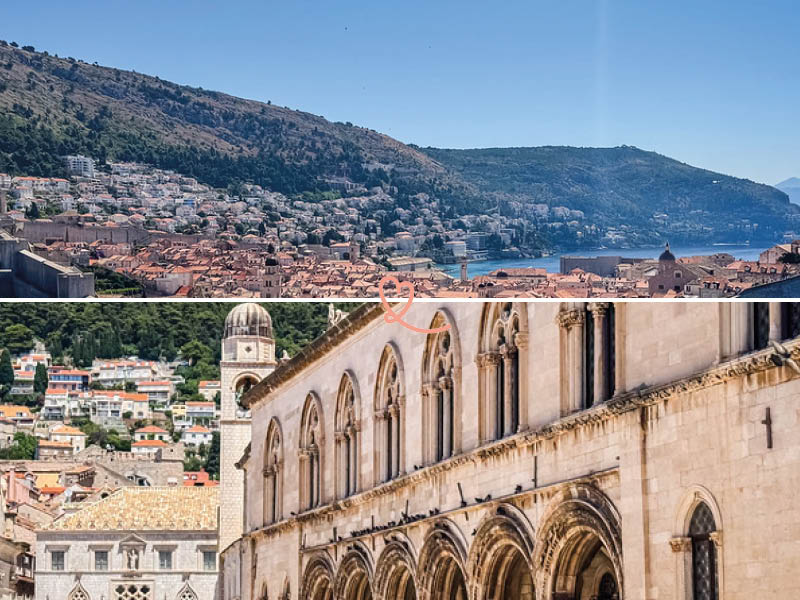
Walking on Dubrovnik’s ramparts is perhaps the most iconic experience the city has to offer. These medieval fortifications, whose construction dates back to the 14th century, encircle the entire old town over a length of almost 2km. From the top of the walls, you can enjoy breathtaking panoramic views of the orange-tiled roofs, the Adriatic Sea and the surrounding islands. We took the loop tour, which allows you to see the old town from all angles, both from the sea and inland. We recommend an early-morning visit to avoid the crowds and take advantage of the ideal light on the rooftops. The ticket is included in the Dubrovnik Pass (€40). You can also opt for a guided tour of the ramparts (ramparts ticket extra) to discover all their secrets. Find out more in our dedicated article here!

WHERE TO STAY IN Dubrovknik
Our favorites: neighborhoods and hotels
Old Town –
Hotel Villa 5DB – check photos and availability
Lapad and Babin Kuk –
Hotel Royal Neptune – check photos and availability
North Shore –
Hôtel Ninon Bed & Breakfast – check photos and availability
Ploče District –
Excelsior Hotel – check photos and availability

Reason 2 – The UNESCO-listed Old Town, a labyrinth of Baroque limestone

Listed as a UNESCO World Heritage Site since 1979, Dubrovnik’s Old Town is a labyrinth of white limestone cobbled streets, lively squares and Baroque facades of remarkable architectural coherence. As you stroll through, you’ll discover Renaissance palaces, historic fountains such as the 15th-century Grande Fontaine d’Onofrio, and a multitude of small chapels. You can’t miss the Stradun, the city’s main thoroughfare. We also enjoyed getting lost in the alleys that run up the hillside, far from the hustle and bustle of the Stradun. The old town, entirely pedestrianized, reveals itself differently at each hour of the day: calm in the morning, lively during the day, atmospheric at nightfall. Access is free of charge, from the Pile Gate in the west or the Ploče Gate in the east. Take a guided tour of the center to learn more about its history. Read our article on the Old Town here.

OUR ADVICE FOR RENTING YOUR CAR AT Croatia
- Compare prices on our preferred platform: DiscoverCars – one of the best rated sites.
- Choose a car that’s compact enough (some passages are narrow).
- There is a lot of demand, book it early.


Reason 3 – The sea, beaches and caves

Beyond its ramparts and Baroque architecture, Dubrovnik is distinguished by its rocky coastline. Most of the city’s beaches are made up of pebbles and limestone, giving them particularly clear water. Banje Beach, close to the Old Town, is the busiest and one of the most accessible. Plage Bellevue is quieter and offers a view of the ramparts from the sea. We particularly enjoyed the small coves along the coast, accessible on foot or by swimming, where you can easily escape the summer crowds. For diving and snorkeling enthusiasts, the water visibility is excellent and the marine life varied.

Among the region’s natural sights, the Blue Grotto (Modra špilja) figures prominently. Located on the island of Bisevo, this sea cave owes its name to the luminous blue reflection produced by sunlight through an underwater opening, a phenomenon best observed in the middle of the day on a clear day. We recommend that you book your tour in advance, as places are limited and the cave can only be visited by boat. Several operators offer half-day or full-day tours combining several islands and caves, departing from Dubrovnik. Book your excursion to the Grotte Bleue now to save time!
Reason 4 – An exceptional historical and museum heritage

Dubrovnik concentrates a remarkable number of historic monuments in a small space. The Cathedral of the Assumption, built between the 17th and 18th centuries in Baroque style, houses a treasure trove of exceptional value: gold and silver reliquaries, a polyptych attributed to Titian and a reliquary of the skull of St. Blaise, patron saint of the city. A few steps away, the Rector’s Palace was the seat of government of the Republic of Ragusa. We were fascinated by its loggia with elaborate columns and sculpted capitals. Finally, the Franciscan Monastery, founded in the 14th century, houses one of the oldest Romanesque-Gothic cloisters in Croatia, as well as a pharmacy in operation since 1317.

A LITTLE MORE patience
All the photos, maps, information and addresses you need to make your stay in Croatia a success will soon be available in a single ebook!
Reason 5 – Fort Lovrijenac and the history of freedom

Perched on a 37m-high rock to the west of the old town, Fort Lovrijenac is one of the most impressive fortresses on the Dalmatian coast. Built in the 11th century to defend the town against Venetian attempts to seize the bay, it bears the Latin inscription “Non bene pro toto libertas venditur auro” (“Freedom cannot be sold for all the gold in the world”). Fans of the Game of Thrones series will recognize it immediately. The fort was used as the setting for King’s Landing’s Red Fortress in several seasons. We were blown away by the 180° view of the sea and ramparts from its terraces. In addition, the Dubrovnik Summer Festival organizes open-air theatrical performances here every year, making it a lively place far beyond its history alone. The fort is a 5-minute walk from the Pile Gate and is included in the Dubrovnik Pass and Game of Thrones tours.

Reason 6 – Mount Srd for panoramic views and contemporary history

If you want to see Dubrovnik in all its splendour, Mount Srd, at 412m, is the ideal vantage point. A cable car links the old town to the summit in just a few minutes, offering spectacular views of the orange roofs, the Adriatic Sea and the island of Lokrum. We particularly recommend the climb at the end of the day: at sunset, the golden light on the ramparts and the water is simply remarkable. At the top, the Imperial Fort, built by Napoleon in the 19th century and heroically defended during the 1991-1992 siege, houses a museum dedicated to the Croatian War of Independence. It’s also possible to climb to the top on foot (approx. 1h30). Visit the official website for more info here.


Reason 7 – The island of Lokrum, a natural refuge from the ramparts

Just 600m off the coast of the old town, the island of Lokrum is a natural refuge classified as a nature reserve, accessible in around ten minutes by the shuttle buses that regularly leave from the old town port. Covered with lush vegetation, pines, century-old olive trees and rare Mediterranean plants, it is also home to a botanical garden founded in the 19th century by Archduke Maximilian of Austria. We were charmed by the peacocks that roam freely between the ruins of the Benedictine monastery and visitors, without the slightest shyness. An inland sea lake offers calm, uncrowded bathing. You can allow half a day to enjoy it to the full. The island is closed in winter, and shuttles run from 9am to around 7pm in high season. Find all boat trips to Lokrum here.

Subscribe to our Newsletter
- Get away from it all with Region Lovers’ beautiful destinations!
- Once a month
- Advertising-free

Reason 8 – Three Islands getaway

Just a few nautical miles northwest of Dubrovnik, the Elaphite archipelago comprises thirteen islands, of which only three are inhabited: Koločep, Lopud and Šipan. This boat trip is a great way to get away from the hustle and bustle of the old town and discover a wild coastline, secluded coves and villages with deserted alleyways. We were seduced by the tranquility of Lopud, whose sandy beaches, rare in Dalmatia, offer a welcome contrast to the ubiquitous pebbles. The archipelago can be explored by scheduled ferry or organized excursion departing from the port of Dubrovnik, with stopovers on several islands in one day. Allow a full day to visit two or three islands. Book your tour now to save time!

Reason 9 – Dalmatian gastronomy, between sea and land

Dalmatian cuisine relies on quality products: fish and seafood from the Adriatic, local olive oil and wines from the Pelješac vineyards. Specialties include peka (meat or octopus cooked under a bell), brudet (fish stew), seafood pasta and crni rižot (squid ink risotto). We recommend visiting the konobas (family-run taverns) rather than the more touristy Stradun restaurants. Rue Prijeko, which runs parallel to the Stradun, is home to a wide range of restaurants. Don’t miss Restaurant 360, a must-visit address. Perched on the ramparts of the Old Town, it offers fine Mediterranean cuisine with a breathtaking view of the Adriatic Sea and the port of Dubrovnik. We also particularly appreciated the Taj Mahal Restaurant for its value for money and authenticity. For a more local atmosphere, the Lapad district also offers some fine restaurants.
Reason 10 – An ideal base for exploring the region

Dubrovnik is also an excellent base for exploring the surrounding area. Cavtat, a small Dalmatian town 18km to the south, can be reached in 20min by boat from Dubrovnik. Its tree-lined waterfront, Venetian palaces and tranquil atmosphere make it an ideal excursion away from the crowds. We also loved kayaking from the old town, along the seaward ramparts to the sea caves carved out of the rock. Heading south, Kotor in Montenegro is a 2-hour drive away (85km). Mostar, in Bosnia-Herzegovina, can be reached in around 2h30-3h: its reconstructed Ottoman Old Bridge and stone streets make it an unmissable excursion. Nearby, the Kravica Waterfall impresses with its turquoise waters and natural pools, a striking contrast to the Dalmatian coastline. We’ve found this location to be one of Dubrovnik’s real assets for curious travellers. If you don’t want to worry about a thing, book one of our organized excursions.
DISCOVER Dubrovnik

Some disadvantages of a trip to Dubrovnik
The tourist influx
Dubrovnik is one of the most popular destinations on the Mediterranean, and this popularity has a downside. In July and August, the city walls, the Stradun and the emblematic sites are saturated with visitors. For a more relaxed experience, we recommend off-season periods, such as spring or autumn, or early morning opening hours. It’s also essential to book your tickets for the ramparts and museums, as well as your accommodation, in advance. Outside the high season, the old town has a much more local atmosphere, and accommodation prices drop significantly.

High prices
Dubrovnik is one of Croatia’s most expensive destinations. In high season, accommodation in and around the old town fetches high prices, and restaurants on the main tourist routes are significantly more expensive than the national average. Entrance fees to major sites also represent a significant expense: the city walls are €35, the cable car €25 return, and the Rector’s Palace €15. To keep expenses under control, we recommend staying in the Lapad district, eating in the konobas of the side streets and considering the Dubrovnik Pass if you’re planning several visits.

Traffic and parking
The old town is entirely pedestrianized: it’s impossible to enter by car. In high season, finding a parking space nearby is a challenge. The main parking lots are the Ilijina Glavica parking lot (closest to the Pile Gate, approx. €5/hr), the Gruz parking lot near the ferry port, and the Lapad parking lot. We recommend arriving early in the morning, or parking in an outlying area and taking the bus to the center. The city bus network is very efficient: lines 1A and 1B connect the old town with the port of Gruz and Lapad. Tickets can be purchased from the driver for around €2.

How to get to Dubrovnik
Dubrovnik is served by Dubrovnik-Čilipi Airport, located 22km from the city center and linked to many European capitals by direct seasonal and regular flights. Airport-city center shuttles (Atlas buses) run every time a flight arrives. The city is also accessible by road from Croatia or neighboring countries: from Dubrovnik to Split, allow around 3h30 (225km), and 5h30 to 6h from Zagreb (600km). Finally, Dubrovnik can be reached by ferry from Split, Rijeka and the Dalmatian islands. See here for ferry connections.

It’s time to book!
Compare everything: companies, prices, schedules and availability.