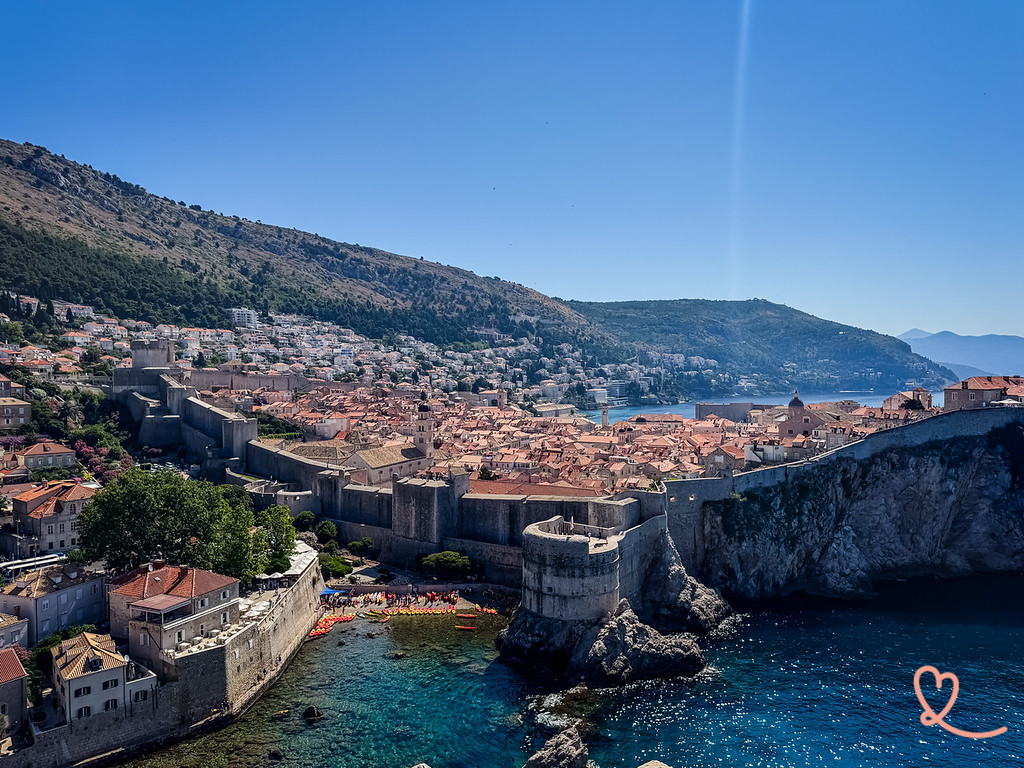
There’s much more to Dubrovnik than its city walls. While the walls protect the city, it’s inside, in the maze of limestone polished by the centuries, that the real heart of the pearl of the Adriatic beats. Between the shadows of narrow streets, the glitter of Baroque palaces and the effervescence of Dalmatian evenings, the Old Town (Stari Grad) is a total sensory experience. We’ve explored every nook and cranny to share our tips and help you make the most of this UNESCO-listed gem.
In this article, we’ll give you some advice on how to best prepare for your visit to Dubrovnik’s Old Town, and help you make up your own mind.
This opinion is completely independent, based on our experiences. We made our own choices, visited the area anonymously, and paid our bills in full.
Why visit Dubrovnik’s Old Town?
Our review
This is an absolute must for Dubrovnik activities. Although crowds can be dense in high season, the city’s architectural coherence is unique in the world. It’s one of the few places where you can still feel the power of the ancient Republic of Ragusa at every step.
Numerous guided tours are available to explore the city, the best way to learn more!

Our favorite
Voluntarily wander down the stairs of the northern quarter. You’ll discover an intimate Dubrovnik: the sound of spoons in coffee cups, laundry drying overhead and that special light bouncing off the white stone.

WHERE TO STAY IN Dubrovknik
Our favorites: neighborhoods and hotels
Old Town –
Hotel Villa 5DB – check photos and availability
Lapad and Babin Kuk –
Hotel Royal Neptune – check photos and availability
North Shore –
Hôtel Ninon Bed & Breakfast – check photos and availability
Ploče District –
Excelsior Hotel – check photos and availability

Access: Dubrovnik old town
Where is the old town?
The historic center is located at the southern end of the modern city. The two main entrances are the Pile Gate (to the west) and the Ploče Gate (to the east).

How to get there
- On foot: If you’re staying in the Ploče or Pile districts, access is very easy in just a few minutes.
- By bus: Most local bus routes (1A, 1B, 4, 6) terminate at Porte Pile.
- By car: The old town is entirely pedestrianized. Parking is very difficult and expensive.
Parking
The nearest parking lot is the Ilijina Glavica public parking lot, about a 15-minute walk away (downhill on the way out, steep uphill on the way back). There is also a private parking lot on Ul. Iza Grada near the Pile Gate and ramparts. We recommend using public transport or taxis/Uber to reach the city gates.

OUR ADVICE FOR RENTING YOUR CAR AT Croatia
- Compare prices on our preferred platform: DiscoverCars – one of the best rated sites.
- Choose a car that’s compact enough (some passages are narrow).
- There is a lot of demand, book it early.


Useful tips: heat, schedules, eating…
Best time to visit
The old town is a veritable “bowl” of white stone. We recommend visiting early in the morning (before 9 a.m.) to enjoy the peace and quiet, or in the late afternoon. Region Lovers’ tip: on hot days, it’s best to visit the churches or the Rector’s Palace between 12 and 3pm to keep cool.

Challenges and obstacles
- Heat and shade: There’s very little shade in the main squares and the Stradun. Reverberation off the white stone is strong.
- Slippery ground: Stones are extremely smooth. Even in dry weather, avoid shoes with flat or worn soles; the risk of slipping is real.
- Stairs: While the Stradun is flat, the city is made up of hundreds of steps as soon as you turn north or south. Not an easy area for strollers.

Visit duration
Allow half a day for a quick overview, but we recommend a full day to take the time to visit the palaces and stroll around stress-free.
A LITTLE MORE patience
All the photos, maps, information and addresses you need to make your stay in Croatia a success will soon be available in a single ebook!
Catering
The old town is packed with restaurants. To avoid the “tourist traps”, steer clear of the Stradun. We warmly recommend the Taj Mahal Restaurant for its authentic cuisine.

1. Stroll through the narrow, peaceful streets
The secret to loving Dubrovnik is knowing how to “get off the axis”. The Stradun is magnificent, but it’s in the perpendicular arteries that the soul of the city is hidden.
- The Pustijerna district: Located near the port, this is one of the oldest districts. It has an almost mystical tranquility.
- Les escaliers du Nord: get your calves ready! The higher you climb towards the northern ramparts, the quieter and more authentic the city becomes.

2. Marvel at our unspoilt heritage
Dubrovnik is an open-air museum. Don’t miss:
- La Grande Fontaine d’Onofrio: A 15th-century masterpiece. The water is fresh and drinkable – a real luxury in summer!
- Sponza Palace: Admire the blend of Gothic and Renaissance styles. One of the few buildings to have survived the great earthquake of 1667.

DISCOVER Dubrovnik

3. Following in the footsteps of Game of Thrones
Whether you’re a fan or not, the transformation of the city into King’s Landing is fascinating.
- The Jesuit Staircase: One of the most photographed places for its famous “Walk of Shame”.
- Tip: Come early in the morning (before 8am) to take photos without the crowds.
- Try out a guided tour on the theme and discover all the places in the series

Subscribe to our Newsletter
- Get away from it all with Region Lovers’ beautiful destinations!
- Once a month
- Advertising-free

4. Find treasures in small boutiques
Forget “made in China” magnets and look for local know-how:
- Filigree jewelry: an ancestral art. Traditional earrings in gold or silver are real metal lace.
- Croatian necktie: Did you know that the Croatian necktie originated here? Several specialized stores offer incredibly fine silk models.

5. Enjoy the night-time ambience
When night falls, the city’s energy changes. The polished limestone slabs glow under the lanterns, creating a magical mirror effect. It’s the perfect time for a passeggiata (stroll) and to listen to the street musicians who take advantage of the perfect acoustics of the stone squares.

Frequently asked questions about Dubrovnik
Where are the best views of Dubrovnik?
Dubrovnik lends itself particularly well to photography and panoramic views. The most famous viewpoint is from the top of Mount Srd, accessible by cable car, where the view of the city walls, the old town and the island of Lokrum is complete. On the ramparts themselves, the section along the sea offers breathtaking views. The Srđ Road viewpoint, accessible by car or on foot from the Bosanka district, is a less crowded alternative. Finally, if you take to the sea or from the island of Lokrum, the view of the golden ramparts is particularly good at the end of the day. The more adventurous might be tempted by a dinner in the sky , where you can see the bay and the city by night or at sunset!

Is the Dubrovnik Pass worth it?
The Dubrovnik Pass is a tourist card that includes access to the city walls, Fort Lovrijenac, several municipal museums (including the Rector’s Palace, the Maritime Museum and MOMAD) and unlimited use of city buses for 1, 3 or 7 days. If you’re planning to visit several sites in a short space of time, the card pays for itself after 2 or 3 visits. On the other hand, if your stay is short or focused on walking and beaches, an à la carte purchase may suffice. Visit the official website for more info here.

Is Dubrovnik expensive?
Dubrovnik is one of the most expensive destinations in Croatia and the Adriatic region. In the high season (July-August), accommodation in and around the old town is very expensive, and restaurants on the main tourist routes are significantly more expensive than the national average. Entrance fees to major sites such as the city walls (€40) or the cable car also represent a considerable expense. To keep expenses under control, we recommend staying in the Lapad district, eating in the konobas in the side streets, and visiting outside the months of July and August.