When is the best time to visit Istria?
It depends on your criteria. Here’s our complete guide with details to help you make your decision based on:
- Weather (temperature, rain, wind, etc.),
- Crowds and prices,
- Dolphin-watching opportunities,
- Sea temperature: When to go swimming in Istria,
- Truffle season and harvest season,
- …
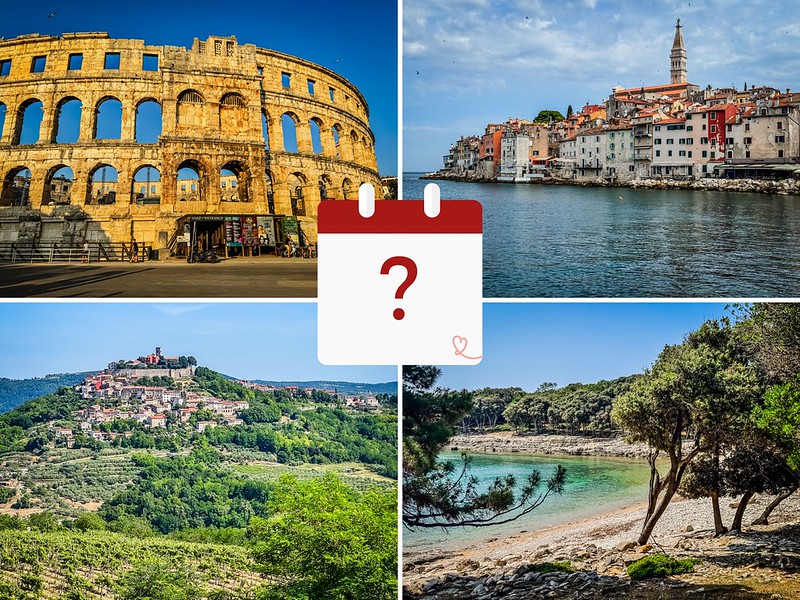
This opinion is completely independent, based on our experiences. We made our own choices, visited the area anonymously, and paid our bills in full.
When to Visit Istria – Summary
Best Month to Visit Istria
Istria enjoys a mild Mediterranean climate, making it a pleasant destination for much of the year. Our favorite month is September: the summer crowds have left, the sea is still warm, and the days still offer plenty of sunshine. We also love this time of year for enjoying the outdoor dining areas in Rovinj or Poreč without having to wait for a table.
See our tips on where to stay in Istria.
Best Time to Visit Istria
It all depends on what you’re looking for:
- Best time to sunbathe: June through August
- Best time to swim in the Adriatic Sea: June through September
- Best time for hiking or biking: April, May, September, and October
- Best time for fine dining and truffles: late September through November
- Best time to avoid the crowds: May and October, or winter

When to Visit Istria – Factors to Consider
If you don’t want to read the whole article, here’s a summary based on what you’re looking for:
- Weather, temperatures, wind –
In the summer, temperatures along the coast average between 23 and 31°C. Northern Istria also experiences more summer thunderstorms than Dalmatia, further south.
In winter, expect daytime highs between 9 and 11°C, with occasional winds from the north—the bora—which make it feel much colder. - Swimming –
The best time to swim in the Adriatic Sea is from June to September, when the average water temperature ranges from 22 to 26°C.

- Crowds –
July and August see the bulk of tourist traffic, particularly around Rovinj, Poreč, and Pula. The Easter and Christmas holidays are also busier than the rest of the year.
May, June, and September remain significantly quieter. - Prices –
Accommodation and rental rates naturally fluctuate with demand: they rise in July and August, as well as during European school vacations.
WHERE TO SLEEP IN Istria
Our favorites: cities and hotels
Rovinj, for its undeniable charm
Grand Park Hotel – Check photos and availability
Porec, for a well-balanced holiday combining nature, beach and history
Valamar Riviera Hotel – Check photos and availability
Pula, for easy exploring and fine dining
Boutique Hotel Velsabbion – Check photos and availability

See our complete selection of the best destinations in Istria
When to Visit Istria – Weather and Conditions
Climate
Istria has a Mediterranean climate along the entire coast, with hot, dry summers and mild, slightly wetter winters.
You’ll enjoy plenty of sunshine for much of the year, with an average of nearly 2,400 hours of sunshine annually.
In the summer, the heat remains bearable, ranging from 23 to 31°C depending on the day.
In the winter, daytime highs hover around 9 to 11°C, and a sweater is a must once the sun goes down.

Coast or inland?
We’ve noticed some real differences depending on where you choose to stay in Istria. Along the coast—in Pula, Rovinj, Poreč, or Umag—the climate remains mild and sunny all year round, tempered by the proximity of the sea.
In the inland areas around Motovun, Buzet, Grožnjan, and Pazin, the hills bring cooler temperatures and more rainfall: this is also where the famous white truffles grow. We recommend combining these two sides of the region to fully appreciate Istria’s diversity.

Length of day and sunshine
In the spring, the days grow longer quickly, and you can already enjoy 13 to 14 hours of daylight in April and May.
In the summer, sunshine reaches its peak, making it ideal for long evenings on the terrace.
In September, you can still enjoy about 12 hours of daylight per day. In October, the days gradually get shorter, but remain long enough to plan visits and excursions.
In winter, the days get significantly shorter, though Istria still enjoys plenty of sunny spells.

Rain in Istria
Rainfall varies significantly by month and by region. On the coast, in Pula, the rainiest months are September and November. Winter remains the wettest season, particularly in the inland areas, where the terrain intensifies the downpours. Conversely, July and August are among the driest months. We still recommend packing a light jacket if you’re traveling outside of the summer months, as occasional thunderstorms can catch you off guard in northern Istria.

Wind in Istria
Yes, it’s windy in Istria, just like along the rest of the Croatian coast. Two winds dominate: the bora, a cold, dry wind from the north that blows mainly in winter and can cause the wind chill to drop; and the maestral, a summer sea breeze that pleasantly cools things down on hot afternoons. However, the maestral is rarely bothersome and actually makes the heat of July and August more bearable by the sea.
When a strong bora is forecast, some boat tours may be postponed or canceled, and the sea can quickly become rough.
Crowds and prizes
There is a steady flow of tourists along the coast from spring through fall. But the number of visitors varies from place to place and from season to season.

The most popular times are:
- July and August
- Easter
- Christmas and New Year’s in Pula
- Weekends during truffle season, in October and November
- Accommodation prices naturally follow these peaks. May, June, and September are generally much quieter and more affordable months.
OUR ADVICE FOR RENTING YOUR CAR AT Croatia
- Compare prices on our preferred platform: DiscoverCars – one of the best rated sites.
- Choose a car that’s compact enough (some passages are narrow).
- There is a lot of demand, book it early.


Sea Temperatures in Istria – When to Go Swimming
Those who enjoy cool water can swim as early as April or as late as November, but the truly comfortable period for most travelers runs from June through September, or even into early October, depending on the year.
Keep in mind that the sea around Istria is slightly cooler than further south in Dalmatia, with an average difference of 1 to 2°C.

The temperature of the Adriatic Sea in Istria varies:
- December, January, February: between 8 and 12°C
- March, April, May: between 11 and 18°C
- June: 21 to 23°C
- July: 23 to 25°C
- August: 24 to 25°C
- September: 22 to 24°C
- October: 18 to 21°C
- November: 15 to 18°C
- December: 12 to 15°C
The best months for swimming are still June, July, August, and September. Check out our list of the most beautiful beaches in Istria, particularly around Cape Kamenjak, south of Pula.

It’s time to book!
Compare everything: companies, prices, schedules and availability.
When to Watch Dolphins in Istria
The calm waters around Brijuni National Park, off the coast of Pula and Fažana, are home to a resident population of bottlenose dolphins.
You can spot them year-round, but sightings are more frequent between April and November, when the sea warms up.

Many excursions are offered in the late afternoon, when the heat subsides and the light is particularly pleasant. However, sightings are unpredictable, and no excursion can guarantee that dolphins will be present.
Book your tour!

Best Time to Visit Istria – Other Factors
When to Go Hiking or Biking in Istria
If you’re traveling during the summer months, we recommend setting out early in the morning, as the heat quickly becomes oppressive on the coastal trails as well as those on Cape Kamenjak.
Spring and fall remain our favorite seasons for exploring the countryside and its hills covered with vineyards and olive groves.
The rest of the year offers excellent conditions for hiking or biking in Istria, particularly along the Parenzana, a former railroad line converted into a bike path that connects Trieste to Poreč over a distance of more than 100 km.

When to Enjoy Water Sports in Istria
Generally speaking, the best time for sailing, kayaking, or stand-up paddleboarding is from April through October, when the sea is calmer and the water is warm enough.
June and September are still top choices: conditions are pleasant and crowds are manageable, unlike in July and August.
The Grape Harvest
The grape harvest generally begins between late August and September, depending on the grape varieties and the conditions that year. This is a good time to visit wineries, but the exact dates of the harvest are often not known until a few weeks in advance.

The Different Truffle Seasons
Istria is home to various species of truffles depending on the season, although the white truffle is the star of the fall. It is important to distinguish between:
- white truffle: mainly in the fall;
- black truffles: different times of the year depending on the species;
- Food festivals: mainly in October and early November.

Description of the Seasons in Istria
Spring in Istria
Spring marks the region’s reawakening: the outdoor dining areas reopen in Rovinj and Poreč, the countryside turns green, and temperatures rise gradually, ranging from 13 to 20°C. We particularly enjoy this season for visiting the hilltop villages in the hinterland without the summer heat. It’s also a great time to start spotting dolphins around Brijuni, before the summer crowds arrive.

Summer in Istria
Summer naturally attracts the most visitors, thanks to the coastal beaches and the festivals that bring the region to life. The Pula Arena hosts the Pula Film Festival in July, while Motovun holds its own independent film festival, renowned for its friendly atmosphere. Temperatures range from 23 to 31°C, and thunderstorms are more frequent in northern Istria than in Dalmatia. Despite the heat, the maestral breeze provides a pleasant cool down at the end of the day by the sea.
In July and August, heat waves can make it difficult to visit Pula, Rovinj, or Motovun in the middle of the day. Summer thunderstorms are often brief but can be intense at times. Plan your city tours for the morning and check the forecast before going out on a boat.

Fall in Istria
If you want to avoid the crowds while still enjoying the warm sea, September remains our top choice. October and November are a completely different story: it’s the season for white truffles and the grape harvest, the perfect time to discover Istria’s culinary delights between Livade and Motovun. Rain becomes a bit more frequent, though it won’t spoil your trip.
Winter in Istria
Winter remains mild compared to the Croatian interior, with daytime highs around 9 to 11°C, sometimes lower when the bora starts to blow. The streets of Pula and Rovinj become quieter, which appeals to travelers seeking an authentic experience. We love this time of year for visiting museums and Roman sites without any lines, even if it means skipping a swim.
But:
- Some boat tours are not available in the winter;
- Tourist attractions have reduced operating hours;
- Some coastal restaurants and seasonal establishments are closing;
- There are fewer ferry routes and water sports activities;
- Small towns can seem very quiet during the off-season.
Events to see or avoid
Depending on your interests, you should also take into account events that could have a major impact on your trip, and adapt your departure dates accordingly:
- If you really want to attend a festival
- If you don’t want to be blocked by an event
Festivals in Istria (Music and Culture)
- February/March
Pula Carnival - May
: Sea Star Festival, electronic music, in Umag - July
Pula Film Festival, in the 1st-century ancient amphitheater
Grožnjan Jazz Festival - August
: St. Lawrence’s Night and the Grisia Festival in Rovinj
: Svetvinčenat Medieval Festival - September
Weekend Media Festival in Rovinj
FAKS International Folklore Festival in Rovinj - October/November
: Livade Truffle Fair (Tuberfest), every weekend
Sports Competitions in Istria
- September
Nova Eroica, gravel cycling - October
Istra 300, road cycling on closed roads around Poreč
Umag Run, half-marathon and fun runs
Teran Wine & Walk, 11.7-km walk around Motovun

Best Month to Visit Istria
And if you’d like to follow along month by month, check out our dedicated articles as soon as they’re published:
- Istria in January
- Istria in February
- Istria in March
- Istria in April
- Istria in May
- Istria in June
- Istria in July
- Istria in August
- Istria in September
- Istria in October
- Istria in November
- Istria in December
DISCOVER Istria