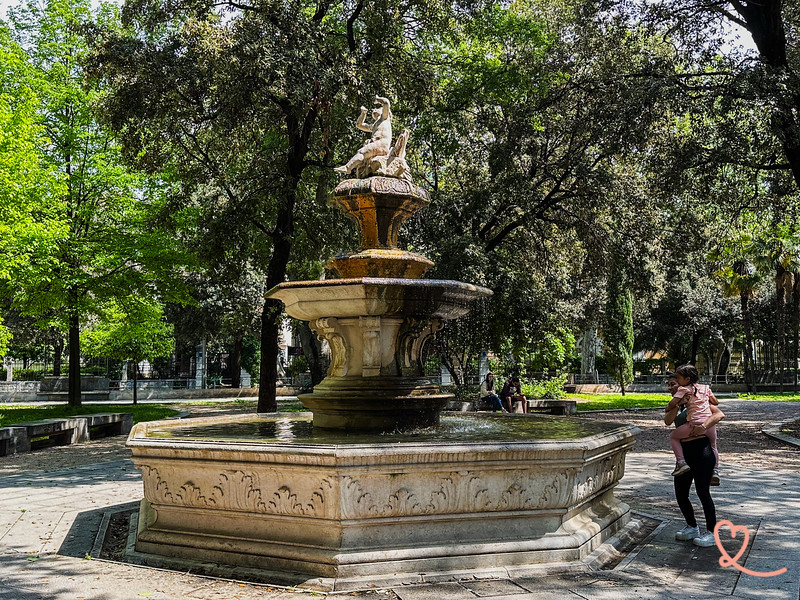
Looking for a bit of fresh air as you explore Split’s historic center? We highly recommend a stop at Josipa Jurja Strossmayera Park, which locals simply call Đardin. This public garden offers a welcome and refreshing break during a visit to Diocletian’s Palace. We particularly enjoyed sitting in the shade of its tall trees and admiring the romantic fountain adorned with a putto, which adds a poetic touch to this green setting.
In this article, we share our illustrated, practical tips to help you best prepare for your visit.
This opinion is completely independent, based on our experiences. We made our own choices, visited the area anonymously, and paid our bills in full.
Why visit Josipa Jurja Strossmayera Park?
Is Josipa Jurja Strossmayera Park worth it? Our opinion:
Yes, Josip Jurja Strossmayer Park is well worth a visit for its family-friendly yet poetic atmosphere, right in the heart of Split. This public park is a true oasis of coolness, located just a few meters from the statue of Gregory of Nin and the Golden Gate of Diocletian’s Palace.
Fully accessible via an access ramp, it offers the perfect spot to take a break during a stroll through downtown. We especially enjoyed stopping by to cool off and rest while exploring the old town.

Our favorite moments
During our visit, we particularly appreciated:
- The putto fountain – This naked boy, a symbol of love in the Italian tradition, adds a romantic, poetic touch to the heart of the garden.
- Remains of the ramparts – Witnesses to Split’s medieval past, they add a historical dimension to the walk.
- The statue of Grégoire de Nin – Installed at the entrance, this iconic statue is reputed to bring good luck to those who touch its toe. We couldn’t resist!

WHERE TO STAY IN Split
Our favorites: neighborhoods and hotels
Marina –
Hotel Ambasador – check photos and availability
Old Town –
Piazza Heritage Hotels – check photos and availability
Bacvice, on the coast –
Hotel Park Split – check photos and availability

Access: Josipa Jurja Strossmayera Park, Split
Where is the garden?
- North of the historic center of Split (Croatia)
- Next to the emblematic statue of Grégoire de Nin
- Facing the famous Golden Gate of Diocletian’s Palace
- Join the Split Museum of Fine Arts
- 3min walk from Split’s St. Domnius Cathedral
How to get there?
- Josipa Jurja Strossmayera Park is easily reached on foot from the city center, through the Golden Gate of Diocletian’s Palace. The imposing statue of Gregory of Nin marks the main entrance, accessible to all via a ramp.
- If you’re coming from outside the city center, the most convenient way to get here is by public transport: the “PAZAR 2” bus stop is just a few minutes’ walk away. Find out more about available routes here.
- We do not recommend access by car, as Diocletian’s Palace is entirely pedestrianized. You’ll need to park in one of the paying parking lots outside the old town, and then walk to the garden. The stroll through the cobbled streets adds to the charm of the visit.

Parking
The park has no dedicated parking for visitors.
We do not recommend parking in the parking lots at the entrance to the historic area, as they are very expensive. Opt instead for the parking lot at Istarska ul., a 4-5 minute walk away.
OUR ADVICE FOR RENTING YOUR CAR AT Croatia
- Compare prices on our preferred platform: DiscoverCars – one of the best rated sites.
- Choose a car that’s compact enough (some passages are narrow).
- There is a lot of demand, book it early.


Useful tips: duration, schedules, eating…
Best time to visit
Josipa Jurja Strossmayera Park is particularly pleasant in the off-season, when Split is a little less touristy, although Diocletian’s Palace remains busy all year round. We advise you to visit in the morning, before 11 a.m., to avoid the mid-day rush. Much appreciated as a refreshing break from the hustle and bustle of the historic center, the park is also adorned with decorations to mark special occasions, such as Easter during our visit, adding a festive and colorful touch to the stroll.

Length of visit and main difficulties
A visit to the park can be as short as 15 minutes, or longer if you’d like to take a break from exploring the old town.
The park is accessible to all, with a ramp located opposite the statue of Grégoire de Nin. There are no public toilets in the garden.

Visiting with children
The park is perfect for families, with a nearby playground to delight children. In spring, it is decked out in Easter decorations, with luminous rabbits and ducks, offering a playful, festive touch that will appeal to the youngest visitors.

Schedules and rates
The park is open all year round, with no specific opening hours and free access.
Catering
The park does not have any on-site dining options or picnic areas. However, it is right next to the old town, which is surrounded by numerous restaurants and cafés. You’ll easily find options to suit every taste, from quick bites to more upscale dining.

Refresh yourself with a stroll through the old town
Enter the park through the majestic Golden Gate of Diocletian’s Palace
On our walk through the old town, we discovered the park by crossing the Golden Gate of Diocletian’s Palace. As you make your way towards the garden, you’ll be able to stand back and contemplate the monument in its entirety: this passage adds both a historical and picturesque dimension to your visit, like a pleasantly staged introduction to the park.

The statue of Grégoire de Nin: a lucky gesture not to be missed
At the entrance to the park, the monumental statue of Gregory of Nin stands proudly opposite the Golden Gate of Diocletian’s Palace. This historic symbol, easily recognizable in the city, is reputed to bring good luck. During our visit, we observed many tourists hurrying to stroke the statue’s big toe, enthusiastically carrying on this good-luck tradition.

A pleasant interlude between poetry and romance
Read Tin Ujević’s engraved poems
Renovated in 2002, Josipa Jurja Strossmayera Park now features poems by the great Croatian poet Tin Ujević engraved on its perimeter walls. This literary touch lends the garden a unique atmosphere, where poetry blends with the calm and serenity of nature. As we wandered around, we were charmed by this invitation to reflection.

Admire the romantic fountain and medieval ramparts
At the heart of the park, the fountain adorned with a putto, an angelic figure, creates a setting that is both romantic and soothing, while the remains of the medieval ramparts, notably the Remparts Cornaro, add a historical dimension. We particularly appreciated this combination of nature, art and history, which lends the park a soothing atmosphere despite its downtown location.

A LITTLE MORE patience
All the photos, maps, information and addresses you need to make your stay in Croatia a success will soon be available in a single ebook!

Frequently asked questions
Is there a drinking fountain in Josipa Jurja Strossmayera Park?
Yes, the park has a drinking water fountain accessible to all, a handy way to cool off during your walk.

Does Josipa Jurja Strossmayera Park host events?
Yes, the park hosts cultural and festive events. It is also decorated for celebrations such as Easter, bringing a colorful and friendly touch to the visit.
History in brief
- Josipa Jurja Strossmayera Park became Split’s main public garden in 1859.
- In the 20th century, a fountain featuring a putto, an angel-like figure, was added to the center of the garden.
- The park was renovated in 2002, with poems by the great Croatian poet Tin Ujević engraved on the surrounding walls.