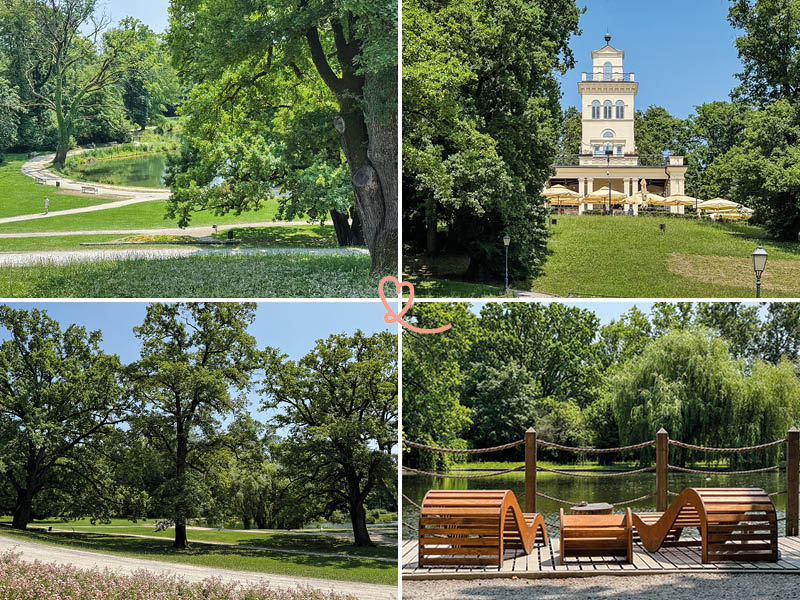
Immerse yourself in the world of Parc Maksimir, a green setting in the heart of Zagreb. This landscaped park, recognized as the first public park in Southeast Europe, is a unique blend of dense forests, wild lakes andcultural spaces. A stroll through Maksimir Park invites you to relax along shady paths winding between lakes and inviting lawns.
In this article, you’ll find some useful tips to help you prepare for your visit to Zagreb’s Maksimir Park and make the most of this exceptional place where relaxation, nature and leisure intertwine around lakes and shady paths.
This opinion is completely independent, based on our experiences. We made our own choices, visited the area anonymously, and paid our bills in full.
Why visit Maksimir Park
Is Maksimir Park worth it? Our opinion:
Yes, a visit to Parc Maksimir is a must if you’re looking for a large green space just a stone’s throw from the center of Zagreb. We enjoyed the variety of atmospheres offered by this 300-hectare park: shady paths, protected woodlands, several lakes, historic pavilions and even a zoo. It’s a lively place, well frequented by locals, but one that retains a real sense of tranquillity.

The park is accessible to all publics. Families will find play areas and plenty to keep the kids entertained, while nature lovers can observe the local wildlife or take a punt on the lakes. We found it easy to get to from the city center, whether by streetcar, on foot or by car.
Why is Maksimir Park famous?
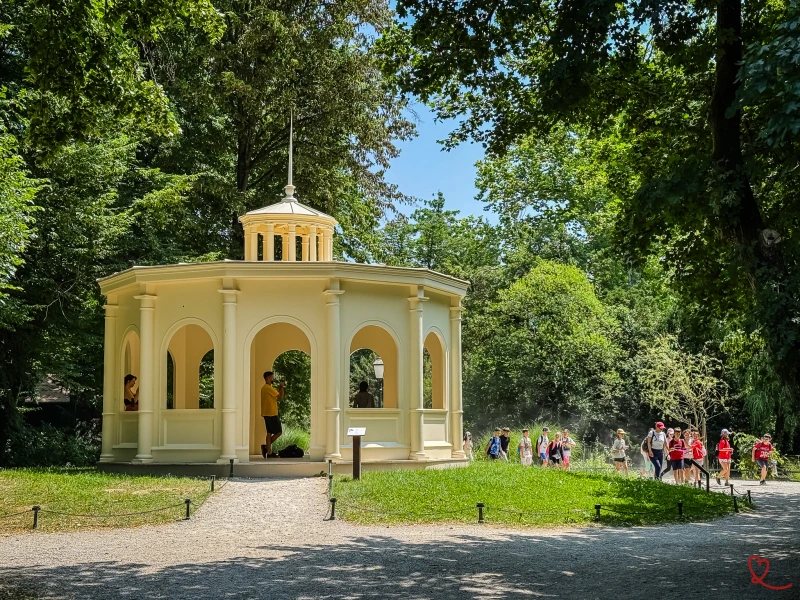
Maksimir Park is considered Zagreb’s oldest landscape park, and one of the first in Southeastern Europe, created in 1787. It was designed in the spirit of romantic English gardens, with alternating forests, meadows, lakes and small decorative buildings. There are also several emblematic features, such as the Echo Pavilion (Jeka), the Vidikovac belvedere and the Swiss House.
The presence of an open-air theater and the Sokolska mogila memorial add a more cultural touch to the walk. We liked the combination of nature and heritage, and the calm atmosphere around the lakes.

Our favorite moments
During our visit, several moments particularly struck us:
- The five lakes and the opportunity to take a boat trip among the swans, in a calm and romantic atmosphere.
- Take a break by the water with a homemade lemonade in one of the park’s small cafés.
- Iconic pavilions scattered across the landscape, including Jeka, Vidikovac and Swiss House.

History in brief
- 1787: Creation of the park under the influence of Bishop Vrhovac and design of the pavilions by Viennese architect Franjo Schücht.
- 1892: Introduction of the horse-drawn tramway serving the park, facilitating access for residents.
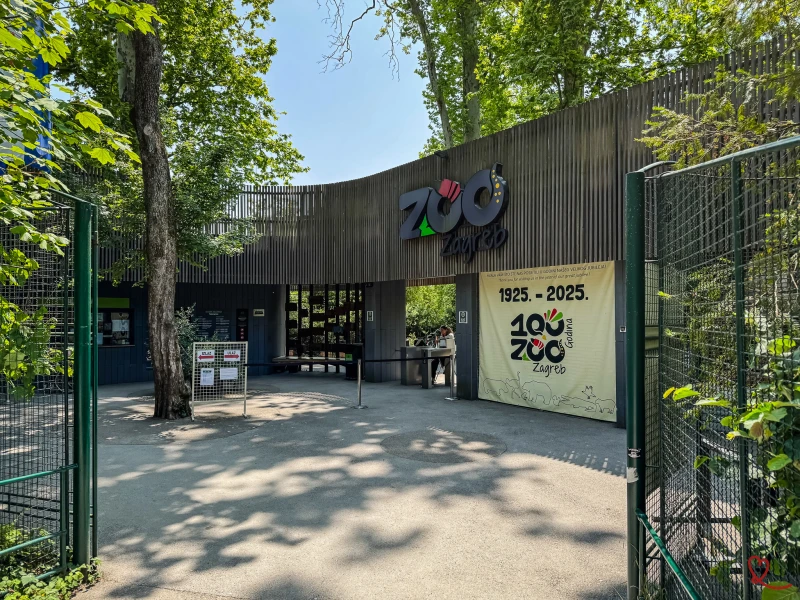
- 1925: Foundation of Zagreb Zoo, today one of the park’s highlights.
- The park is listed as a protected cultural asset, renowned for its English neoclassical and romantic landscape style.
- The oldest Dedek oak, over 600 years old, is a natural and historical symbol of the park.

[Ville_hotels_ou_dormir]
Access: Maksimir Park, Zagreb
Where is Maksimir Park?
Parc Maksimir is located at 1 Maksimirski perivoj, 10000 Zagreb, Croatia.
This vast natural area covers more than 300 hectares. It’s a haven of peace close to the city center.

How to get there?
- On foot: about 45 minutes from the historic center.
- By streetcar: several lines (4, 7, 11 or 12) take you to the Maksimir stop in less than 20 minutes.
- By car: about 15 minutes from downtown.

Parking
- The park does not have a dedicated parking lot, but you’ll find spaces nearby. A public parking lot is just a few minutes’ walk away. Access is easy and convenient.
- In busy periods, we advise you to optfor public transport or walking.

OUR ADVICE FOR RENTING YOUR CAR AT Croatia
- Compare prices on our preferred platform: DiscoverCars – one of the best rated sites.
- Choose a car that’s compact enough (some passages are narrow).
- There is a lot of demand, book it early.


Useful tips: duration, schedules, eating…
Best time to visit
The park can be enjoyed all year round:
- In spring for flowering,
- In summer for cool undergrowth,
- In autumn for flamboyant colors,
- In winter, some lakes can freeze over and create a special atmosphere, although frosts are rarer today.
To avoid the crowds, prefer weekdays.

Length of visit and main difficulties
- Easy stroll: allow 1 hour for a loop around the lakes and discover the main pavilions.
- In-depth tour with zoo: allow 2 to 3 hours to stroll around, visit the zoo and stop off at a terrace.
- Public toilets are well distributed and signposted throughout the park.
- The park is accessible to people with reduced mobility.
- Dogs are allowed.

Advice on how to visit
We recommend you start with the lakes and their surroundings. This is where the terraces, boats and first points of interest are concentrated. Then on to the Vidikovac, Jeka and Swiss House pavilions. Finish with the memorial and the open-air theater.

Visiting with children
The park is very suitable for families:
- Two well-equipped playgrounds,
- Wide open spaces for running or picnicking,
- Zagreb Zoo, easily accessible from the main paths,
- Educational activities and workshops in summer.
Schedules and rates
- Parc Maksimir is open all year round, 24 hours a day.
- Admission is free.
- The zoo is open daily, with admission charged (approx. €4 per adult).
- More information on the official website here.

Guided tours
- Thematic guided tours are available to discover the park’s history, legends and points of interest.
- Educational programs for children and schools are also available.
- Reservations are recommended, especially for school groups.

Catering
- There are several food and beverage out lets in the park, including the Vidikovac lookout and lakeside restaurants. You’ll find plenty of options for eating and enjoying nature at the same time.
- Picnic areas are available, and some areas allow barbecues in summer.

[Ville_articles]
Walking in Maksimir Park: paths, pavilions and scenes of life
Stroll under the trees and discover shady paths
A stroll through Parc Maksimir is like immersing yourself in nature’s bounty, with its wooded paths, clearings and protected forests. The shady, well-maintained paths provide a pleasant setting for a leisurely walk at any time of day. We appreciate the calm that prevails in these areas, far from the noise of the city.

In places, the vegetation becomes denser, creating an intimate atmosphere. Light filters through the branches, birds sing, and you may even come across a squirrel or a heron. It’s a place that invites you to slow down.
The park’s emblematic pavilions: Vidikovac, Jeka and Swiss House
Several pavilions punctuate the walk and bear witness to the park’s romantic past. The Jeka pavilion, tucked away in a wooded alley, offers a little acoustic curiosity: when we speak aloud, a clear echo returns to our ears. It’s an astonishing moment, discreet but striking.

The Vidikovac lookout, perched on a hillock, offers an unobstructed view. Here, we found a terrace where we could take a break. The Swiss House is set further back, its Alpine architecture unexpected. Each pavilion brings a change of pace to the visit and encourages us to stop.
Cultural and symbolic spaces: open-air theater and Sokolska mogila memorial
Maksimir Park is not just a landscape walk, but also a place of memory and culture. Not far from the gazebo, an open-air theater stage stands among the trees. Its contemporary metal structure contrasts with the natural setting, but the whole works rather well.

Further on, the Sokolska Mogila memorial pays tribute to the Sokol movement, a symbol of physical vitality and national unity. These spaces, often quiet when not in use, add a deeper dimension to the visit. They remind us that the park is also a place of gathering and history.

Relaxation, nature and leisure around the lakes of Maksimir Park
Wild lakes and the peaceful atmosphere of a boat trip
The lakes are one of the park’s most attractive features. Some are still very natural, lined with reeds and sparsely developed, while others are accessible via pontoons or small docks. We enjoyed walking along their shores, as well as taking a boat ride.

The navigation is gentle, among the swans and ducks, with a lovely sense of calm. It’s a simple, accessible activity, but one that really transforms the visit. It lets you see the park from a different angle and take full advantage of the surrounding vegetation.
Waterfront terraces and the Philharmonic lawn
Along the lakeshores, a few discreet terraces offer the chance to take a break and enjoy the view. Here, you can sip a homemade lemonade or a cup of coffee, watching the boats glide along the water. It’s also where locals come to read, chat or simply enjoy the peace and quiet.

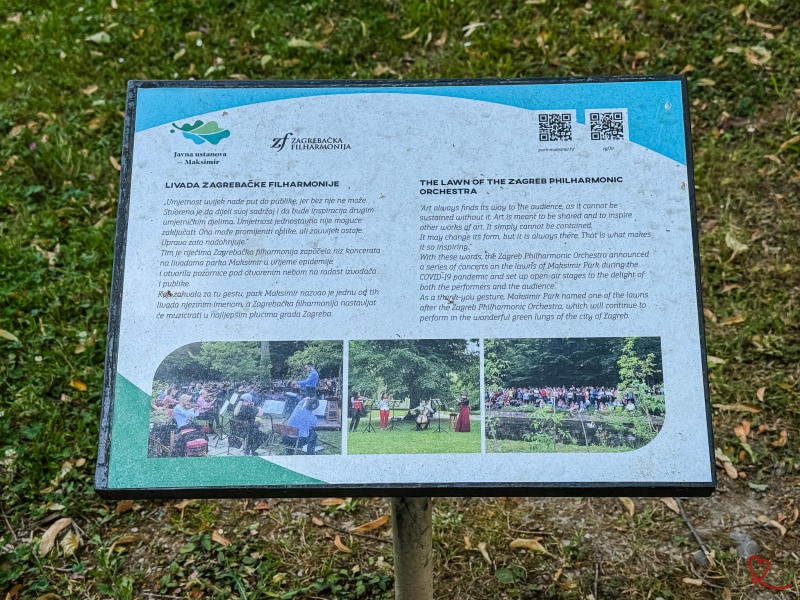
The large lawn, which sometimes plays host to the Zagreb Philharmonic Orchestra, adds a lively touch to the picture. When empty, it’s a pleasant, open space. When it comes to life, it becomes a place of conviviality, where music, culture and relaxation come together.
Children’s games and a visit to Zagreb Zoo
Parc Maksimir is a great place for families. Two well-spaced out play areas keep children entertained while adults relax or continue their walk.

Zagreb Zoo, located in the heart of the park, is set on an island within walking distance. Although we didn’t visit it, its reasonable size and diversity make it a popular outing for local families. The zoo’s wooded environment extends the nature experience, while offering a more playful and educational approach. It’s an option to consider if you’re visiting the park with children.
Frequently Asked Questions
Has Maksimir Park inspired any artists or cultural works?
Yes, Maksimir Park has left its mark on the collective imagination ever since its creation. Its romantic style, lakes and pavilions inspired many Croatian artists, particularly in the 19th century. It appears regularly in painting and photography, as well as in literary works. Even today, its setting is used as a backdrop for film shoots and open-air concerts, proof of its cultural anchorage in the life of Zagreb.

Is it possible to see wild animals in Maksimir Park outside the zoo?
Yes, and that’s one of the discreet pleasures of the visit. You’ll often come across squirrels in the paths, herons or ducks around the lakes, and sometimes even deer in the more wooded areas. The park is also a great spot forbirdwatching: several species can be seen depending on the season. To maximize your chances, come early in the morning or late in the afternoon, when crowds are lower and wildlife more active.