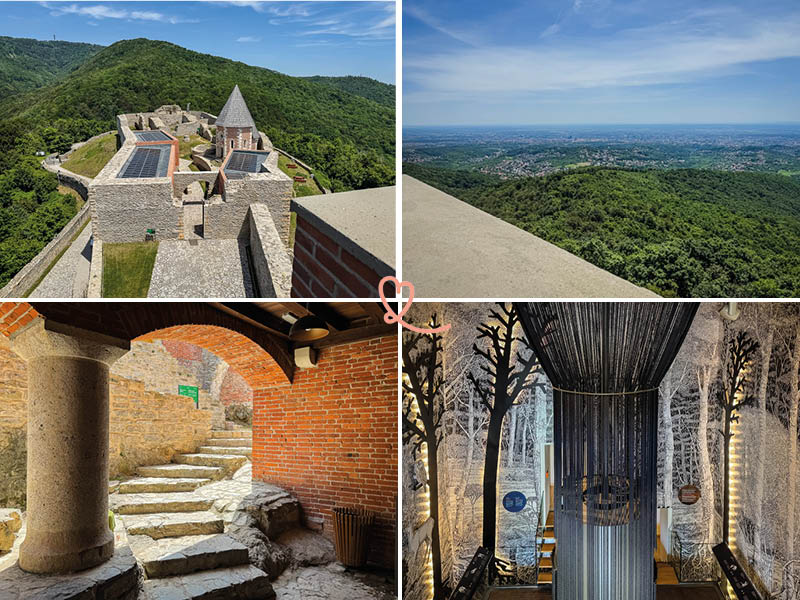
Do you know Medvedgrad Castle in Zagreb? A medieval gem perched on Medvednica hill, it was built in 1254 to protect the city. This fortress offers a unique insight into the region’s history. Recently restored, it reveals its walls, octagonal chapel and above all its high south tower, offering a spectacular view over Zagreb. We enjoyed the interactive exhibits, which make the visit lively and accessible to the whole family.
In this article, you’ll find some useful tips to help you prepare for your visit to Medvedgrad Castle and enjoy a particularly rewarding experience.
This opinion is completely independent, based on our experiences. We made our own choices, visited the area anonymously, and paid our bills in full.
Why visit Medvedgrad Castle in Zagreb?
Is Medvedgrad Castle worth it? Our opinion:
A visit to Medvedgrad Castle is a must. Its well-preserved medieval military architecture offers a fascinating escape above Zagreb. We loved the interactive exhibits in the south tower and the panoramic view of Zagreb from the ramparts. It’s a place for history buffs and families alike.
We think it’s one of Zagreb’s best attractions.

Why is Medvedgrad Castle famous?
Medvedgrad Castle is famous for its defensive role after the destruction of Zagreb by the Tatars in the 13th century. Never attacked, it bears witness to a rich and eventful history. It has been home to many Croatian and Hungarian rulers, as well as the legendary Black Queen, Barbara Celjski, a mysterious figure associated with local legends. Its medieval military architecture, with high walls, tower and octagonal chapel, makes it a major historical monument and a place of remembrance for Croatian soldiers.

Our favorite moments
During our visit, several moments particularly struck us:
- Interactive exhibits in the South Tower: this huge, recently restored tower brings together sounds, images and tactile experiences to tell the story of the site and awaken visitors to the region’s ecological issues.
- Panoramic views from the ramparts: from where you can admire Zagreb and the wooded hill of Medvednica. A superb moment of wonder.
- The legend of the Black Queen still haunts the castle…

History in brief
- 1254: Construction of the castle after the destruction of Zagreb by the Tatars.
- Never attacked, it served as a defensive fortress and residence for several sovereigns.
- 1590: Abandoned following a major earthquake.
- 1979: Start of archaeological research and gradual restoration of the site.
- 1994: Erection of the Oltar Domovine monument (Altar of the Homeland) in memory of Croatian soldiers.

How to get there: Medvedgrad Castle, Zagreb
Where is Medvedgrad Castle?
Medvedgrad Castle is located at 16 Himper, Zagreb.
- It is located on the Medvednica hill, some 10 km from the town center.
- The site is located in the heart of the natural park of the same name.
How to get there?
- From downtown Zagreb, it’s about a 20-minute drive to the castle.
- Medvedgrad can be reached by bus from nearby stops, but it’s another 15min walk to the castle.

Parking
- Parking is available at the entrance to the site, accessible via a narrow, one-way tarmac road.
- The return route is another one-way street.
- Parking is organized, but the road remains narrow, so please follow the signs.

OUR ADVICE FOR RENTING YOUR CAR AT Croatia
- Compare prices on our preferred platform: DiscoverCars – one of the best rated sites.
- Choose a car that is powerful enough (the roads are steep) but compact (some passages are narrow).
- There is a lot of demand, book it early.


See our tips (coming soon)
Useful tips: duration, schedules, eating…
Best time to visit
- Medvedgrad Castle is moderately popular, even in summer.
- However, choose days when the weather will allow you to take full advantage of the view.
- A weekday morning will give you the impression of being alone in the world.

Length of visit and main difficulties
- Allow 1-2 hours to explore the castle and its interactive exhibits.
- The toilets are located near the store in the visitor center.
- The site is not very accessible to people with reduced mobility, with less than 25% adapted access.
- We didn’t see any luggage lockers.

Advice on how to visit
The tour is self-guided. We recommend starting with the tower’s exhibitions. This gives you access to the ramparts and panoramic views of Zagreb. Then explore the palace and visitors’ center.

Visiting with children
Medvedgrad’s exhibits are fun and educational, perfect for children. They awaken their interest in nature and history. They’ll be captivated by medieval legends and historical re-enactments. The site is family-friendly, but accessibility is limited.

Schedules and rates
- Open Tuesday to Sunday, 9 a.m. to 4 p.m. (last entrance at 3 p.m.)
- Closed on Monday.
- Price: 8€ to 10€ depending on the day of the visit
- More information and detailed prices on the official website here.

Guided tours
We haven’t noticed any guided tours on site, so we invite you to consult the official website or contact the château directly for more information here.
Catering
During our visit, we didn’t see a restaurant on site, but picnic tables are available around the château.

Start of the tour: the fortifications and the south tower
Medieval architecture and defensive organization
The fortress is a perfect example of medieval military architecture. Built in the XIIIᵉ century to protect Zagreb from invasion, it adopts a compact plan surrounded by powerful ramparts. The walls and tower controlled access and anticipated any attack. The builders took advantage of the natural slope of the hill to accentuate the defense: assailants had to climb the relief before confronting the walls.

Inside, spaces were organized to combine residential and military functions, between daily life and strategic protection. We found that, although partially restored, the castle retained its authentic medieval style, with features such as the residential palace and octagonal chapel.

The South Tower and its superb views over Zagreb
The highlight of the visit, the south defense tower now houses a modern museum trail. Inside, interactive exhibits explore the milestones in the fortress’s history. Some rooms are also dedicated to local flora and fauna.

The climb continues to the top of the tower, from where an exceptional panorama opens up over Zagreb and the surrounding plain. The contrast between the dense forest of Medvednica and the urbanism of the Croatian capital creates a striking backdrop. This lookout illustrates both the site’s defensive ingenuity and the beauty of its natural setting, for an experience that blends historical immersion and scenic contemplation.

Continuation of the tour: discovering the palace
The chapel and the little palace
In the heart of the palace, we first discovered the courtyard that leads to a delightful octagonal chapel. Small in size, its unique architecture, with its geometric shapes, is particularly interesting.

Directly opposite, we were able to enter an underground room now dedicated to medieval cuisine. This is the Petit Palais. Usually, ingredients and recipes from the period are on display. This was not the case on our visit, but perhaps you’ll have better luck than we did.

The medieval well and lapidarium
Medvedgrad’s medieval well, dug into the rock in the inner courtyard, illustrates medieval defensive ingenuity. Several meters deep, it guaranteed a supply of drinking water during prolonged sieges. We saw for ourselves how vital it was to the survival of the castle’s defenders.

We also found the lapidarium (a collection of carved stone fragments). These are architectural remains unearthed during the excavations. These capitals, gargoyles and decorative elements reveal medieval construction techniques and are authentic testimonies to the sculpted art of the 13th century.

End of the tour: the visitors’ center and surrounding area
Historical landmarks and memory of place
Housed in the so-called Grand Palais, the Medvedgrad Visitor Center is a key venue for understanding the region’s medieval and natural history. It features interactive exhibits that raise awareness of Medvednica’s rich history. You’ll discover stories about the fortress, its legends and its role in protecting Zagreb.

Exhibitions combine multimedia, models and historical objects, offering an immersion in medieval times. The center plays an important educational role, especially for children, with interactive workshops and courses to awaken their curiosity about nature and local history. It’s a must if you want to take your visit to the castle one step further, and better understand its cultural and environmental significance.

The Altar of the Fatherland (Oltar Domovine)
Leaving the castle grounds, we walked around the foot of the ramparts and found the Altar of the Fatherland (Oltar Domovine), the work of Croatian sculptor Kuzma Kovačić. The monument pays tribute to Croatian soldiers who fell in defense of the homeland.

It blends in with its medieval surroundings, offering a unique vantage point over Zagreb and the surrounding plain. This strategic position, symbolically chosen, allows visitors to gaze out over the territory once defended by the fortress.

Subscribe to our Newsletter
- Get away from it all with Region Lovers’ beautiful destinations!
- Once a month
- Advertising-free

Frequently asked questions
Is Medvedgrad really haunted by the “Black Queen”?
The legend of the “Black Queen” of Medvedgrad is part of Croatian folklore, with no proven historical basis. This mysterious figure, supposedly the spirit of a medieval noblewoman, has fuelled popular tales for centuries. Although some visitors report strange sensations, we have had the feeling that it is the special atmosphere of the medieval ruins that stimulates the imagination.

Is there really a secret passage linking Medvedgrad to Zagreb?
No secret passage linking Medvedgrad directly to Zagreb has been discovered by archaeologists. This persistent legend is probably inspired by the many tunnels and underground passages typical of medieval fortifications, some of which we have seen. They were used for storage or as emergency evacuation routes.