Have you heard of the Split Cathedral Treasury Museum, a discreet exhibition space nestled opposite the majestic St. Domnius Cathedral? Housed in a historic building of Diocletian’s Palace, this museum houses a collection dedicated to religious art. In our opinion, this visit completes the discovery of the cathedral, notably to admire the reliquaries of Saint-Domnius up close and to plunge into the sacred history of the city.
In this article, you’ll find our practical tips and photos to help you prepare for your visit.
This opinion is completely independent, based on our experiences. We made our own choices, visited the area anonymously, and paid our bills in full.
Why visit the Split Cathedral Treasure Museum?
Is the Treasure of St Domnius Cathedral worth it? Our opinion:
Yes. For those with a passion for religious art and history, this visit is an essential complement to a visit to St. Domnius Cathedral. It houses remarkable religious works, ancient manuscripts, finely crafted reliquaries and architectural fragments from religious buildings that tell the story of the region’s artistic evolution.

Why is Split Cathedral’s Treasure Museum famous?
The Split Cathedral Treasury Museum is renowned for its collection of Sacred Art, featuring reliquaries, paintings, textiles, ancient manuscripts, religious objects and architectural fragments from St. Domnius Cathedral.
Housed in a historic building in the heart of the Peristyle of Diocletian’s Palace, it benefits from an exceptional UNESCO World Heritage site. This strong local link gives the museum a unique cultural value.

Our favorite moments
During our visit, there were several moments that particularly struck us:
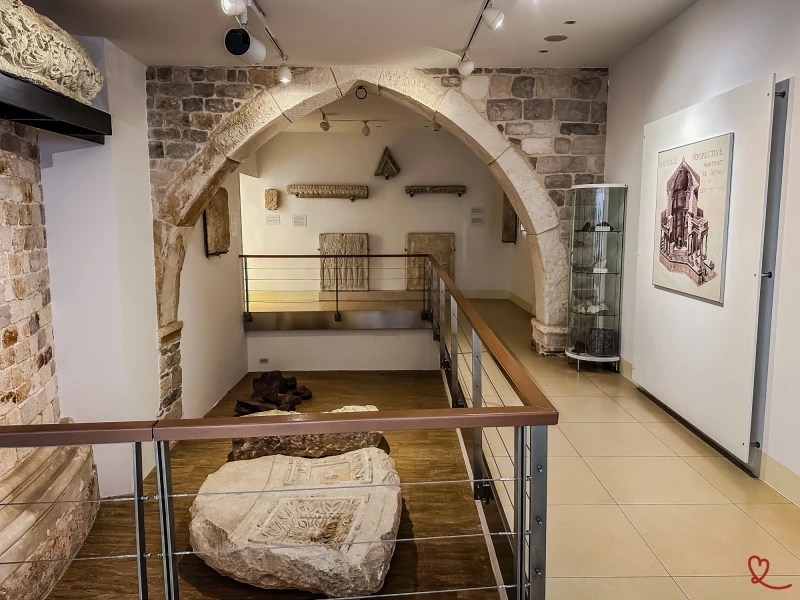
- Architectural fragments of St. Domnius Cathedral: observing these remains gave us a sense of the grandeur of the original edifice.
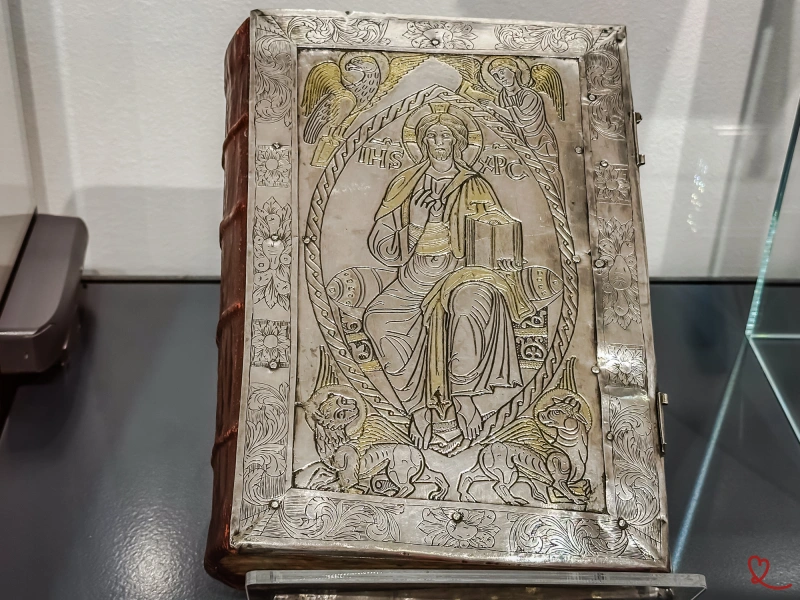
- Ancient manuscripts: contemplating these remarkable works took us on a visual journey back in time.
- The mosaics of the cathedral dome: a fascinating detail that reveals the shimmering hues of the rooms through a magnifying glass.

History in brief
The Split Cathedral Treasury Museum is housed in one of the historic buildings of Diocletian’s Palace, directly opposite the majestic St. Domnius Cathedral. This exceptional UNESCO World Heritage site offers a unique setting where Roman history blends with medieval and Baroque religious art. Even with little information available about the creation of the museum itself, its location at the heart of this historic complex makes it an essential place to understand the artistic and spiritual evolution of Split.

How to find us: Musée du Trésor de la Cathédrale Saint-Domnius
Where is the Treasure of St Domnius Cathedral?
- In the historic center of Split (Croatia)
- In the heart of Diocletian’s Palace in the Peristyle
- Opposite Saint-Domnius Cathedral
- The Vestibule of Diocletian’s Palace
- 2min walk from Split Ethnographic Museum
How to get there?
Entrance to the museum is via the Peristyle of Diocletian’s Palace, directly opposite St. Domnius Cathedral. The area is entirely pedestrianized, so you’ll need to get there on foot.
For those coming from further afield, the public transport network is very convenient: the “PAZAR 2” bus stop is just a 4-minute walk from the museum. Find out more here.
If you arrive by car, it’s not possible to access the museum directly. You’ll have to park outside Diocletian’s Palace and continue on foot through the old town, enjoying the picturesque lanes that lead to the Peristyle.

OUR ADVICE FOR RENTING YOUR CAR AT Croatia
- Compare prices on our preferred platform: DiscoverCars – one of the best rated sites.
- Choose a car that is powerful enough (the roads are steep) but compact (some passages are narrow).
- There is a lot of demand, book it early.


See our tips (coming soon)
Parking
The Museum of the Treasure of St. Domnius Cathedral has no parking facilities, as it is located in the heart of Diocletian’s Palace, an entirely pedestrian zone.
We do not recommend parking in the parking lots at the entrance to the historic area, as they are very expensive. Opt instead for the parking lot at Istarska ul., a 4-5 minute walk away.
Useful tips: duration, schedules, eating…
Best time to visit
The best time to discover the treasures of Split Cathedral is during the low season, when the Diocletian’s Palace is less crowded with tourists. It’s best to avoid the middle of the day, for a quieter, more enjoyable visit.
On the whole, the majority of visitors head straight for the cathedral, which makes the museum more peaceful and allows you to take your time admiring the works without the crowds.

Length of visit and main difficulties
Allow between 30min and 45min for a complete tour of the museum.
The museum is relatively wheelchair-accessible, with an elevator available to access the upper floors. Please note, however, that there are 3 steps at the entrance and the corridors are narrow.

Advice on how to visit
Start your visit on the first floor, where architectural plans and fragments are on display. Then climb to the upper floors to discover the various rooms devoted to Sacred Art, featuring a wide variety of works. The itinerary is free, with no set direction, allowing you to enjoy each room at your own pace. To leave the museum, you simply have to go back down all the stairs, a great opportunity to return to the upper levels if something has particularly attracted you.

Visiting with children
This museum is not particularly suitable for children. The museography is classic and focused on Sacred Art, with long, unstimulating texts. There are no installations or interactive experiences for younger visitors. The visit is aimed more at adults with a passion for religion and local history.

Schedules and rates
The museum is open from 9am to 4pm Monday to Saturday, and from 10am to 6pm on Sundays. Last entry 30min before closing time.
Several combined ticket formulas are available, depending on the areas you wish to visit, with prices ranging from €9 to €15, which can include:
- Treasury Museum
- Cathedral
- Bell tower
- Crypt
- Baptistery
You can also visit the museum alone for €5. Children under 13 are free, making it easier for families to visit together.

Catering
The museum is located in the heart of the old town, surrounded by numerous restaurants and cafés. You’ll easily find options to suit all tastes, from quick meals to more refined dining. For a gourmet break, explore the alleyways around the Peristyle of Diocletian’s Palace, including Restaurant Fig, offering light, modern and creative cuisine based on fresh produce, with a particular focus on vegetarian and vegan dishes. Stay tuned for our selection of the best places to eat in Split.

Beginning of an architectural and spiritual journey
The impressive columns of the Peristyle of Diocletian’s Palace
Facing the entrance to St. Domnius Cathedral, the Peristyle of Diocletian’s Palace impresses with the majesty of its columns and the beauty of its Roman architecture, offering a timeless historical setting. Nestled in a corner of the peristyle, the Split Cathedral Treasure Museum extends this immersion: the religious relics on display find a perfect setting in this historic building, offering a perfect continuity between Sacred Art and the architectural heritage of the palace. We began our visit as soon as we discovered the peristyle.

Between historical plans and architectural fragments
In the first part of the tour, it was the ancient plans of St. Domnius Cathedral and the Temple of Jupiter that captured our attention. We were also engrossed in observing the shimmering mosaics that made up the dome of Split Cathedral, which we could admire up close thanks to a magnifying glass. The architectural fragments on display, mainly from the cathedral but also from other local religious buildings, provide a direct connection to Split’s history and spirituality.
Discovering the altar of Notre-Dame-de-Bethléem church
During our visit, we were particularly struck by the altar of Notre-Dame-de-Bethléem Church. We had discovered this church during our exploration of Marjan Park, and had already caught a glimpse of this altar, but only through a simple photo on a church cartel. Seeing it for real in the museum was a whole new experience! This stone triptych, dating from around 1500, is divided by pilasters and surmounted by a crucifixion scene.

A LITTLE MORE patience
All the photos, maps, information, good addresses to make your stay in Provence a success, will soon be gathered in a single ebook!
If you’d like to be notified when our Madeira guide is published, please subscribe:
Diving into Sacred Art
In honor of Saint Domnius
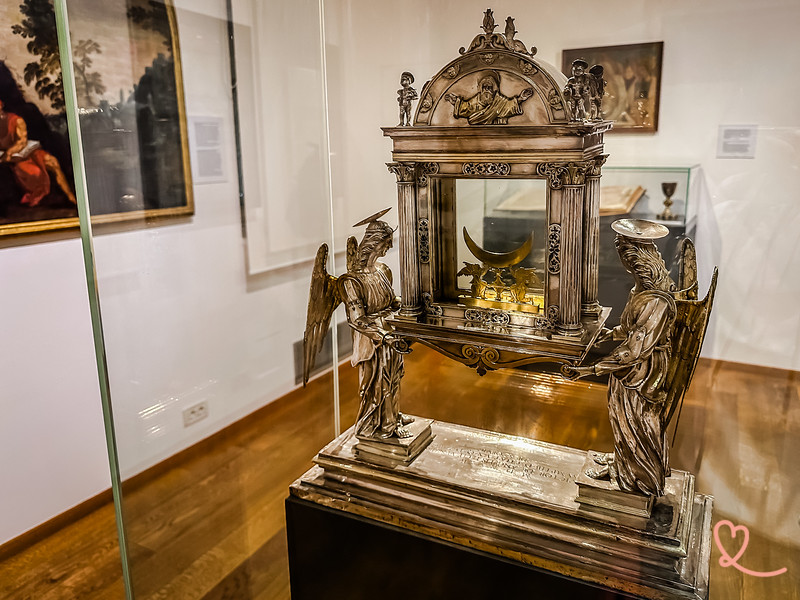
The museum pays tribute to St. Domnius, bishop and martyr of the IIIᵉ century, considered the patron saint of the city and protector of the cathedral. Among the masterpieces, a silver bust made in Venice in 1699 in a Baroque style immediately catches the eye with its fine details and colored stones. Next to it, the reliquary containing an arm of St. Domnius reinforces the visual and symbolic connection with the neighboring cathedral, creating a tangible link between the city’s religious history and the sacred objects on display.

Antiqued manuscripts
The museum’s permanent collection features a selection of ancient manuscripts and books that bear witness to Split’s religious heritage. These works invite contemplation. We were particularly struck by the manuscript shown in the photo below. This codex, containing liturgical texts, is written mainly in caroline script and dates from the middle of the XIIᵉ century. Known as the
Other religious works and curiosities
The museum exhibits a variety of religious objects, from paintings and crucifixes to episcopal crosses and ancient liturgical vestments. Among these treasures, an impressive chalice made by a workshop in Treviso is a particular eye-catcher. Richly decorated with angels and clouds, it offers a fascinating visual spectacle that illustrates Sacred Art in all its splendor, bearing witness to the refinement and creativity of the craftsmen who contributed to Split’s religious history.

Subscribe to our Newsletter
- Get away from it all with Region Lovers’ beautiful destinations!
- Once a month
- Advertising-free

Frequently asked questions
Can I visit the crypt of Split’s St Domnius Cathedral?
Yes, the Saint Lucia crypt is open to visitors. It lies beneath St. Domnius Cathedral, accessible via a narrow, stepped corridor leading to a circular room. This crypt is famous for its miraculous spring, said to restore sight, where visitors throw coins for good luck. The atmosphere is calm and solemn, offering a contrast with the nearby Peristyle of Diocletian’s Palace.

Can you climb to the top of the bell tower of Split’s St Domnius Cathedral?
Yes, you can climb to the top of Split Cathedral’s bell tower. The 57-metre bell tower offers spectacular panoramic views. From the campanile, you can admire Split, the islands of Šolta and Brač, as well as Marjan Hill. This experience is the perfect complement to a visit to Split Cathedral.