A small museum nestled in an 18th-century palace, the Croatian Museum of Naive Art is unique in Zagreb. It plunges visitors into the world of
In this article, you’ll find some useful tips to help you prepare for your visit and enjoy a memorable experience at the heart of this beautiful museum.
This opinion is completely independent, based on our experiences. We made our own choices, visited the area anonymously, and paid our bills in full.
Why visit the Croatian Museum of Naive Art in Zagreb?
Is the Croatian Museum of Naive Art worth a visit? Our opinion:
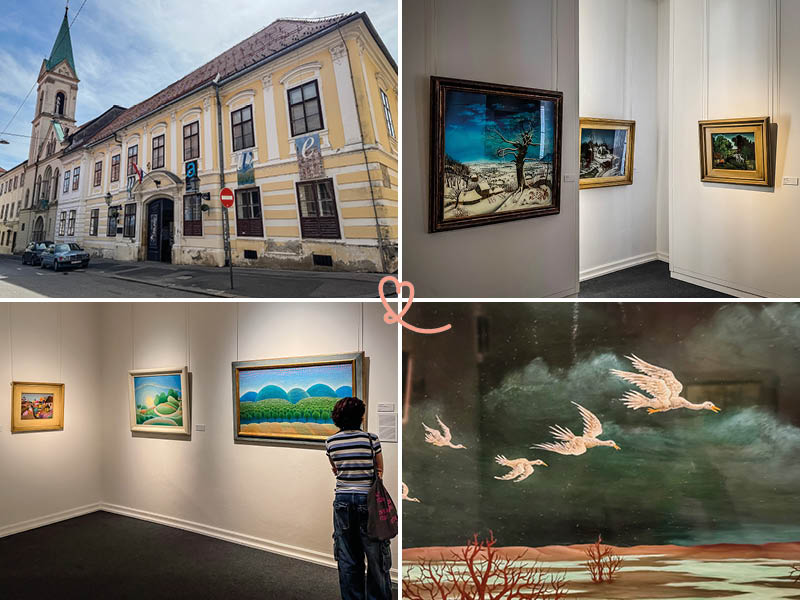
Absolutely! Housed in the 18th-century Palais Raffay(a little faded at the time of our visit), it offers an immersion in Croatian popular creativity. We particularly enjoyed discovering local naive art, with around 80 works on display. The calm, authentic layout invites you to grasp the poetic and social dimensions of this very special art.
- A renowned international collection of 20th-century paintings, sculptures, drawings and prints
- A unique historical setting in Zagreb’s Upper Town (Gornji Grad)
In our opinion, it’s one of the best attractions in Zagreb, a real favourite!

Why is the Croatian Museum of Naive Art famous?
The museum is famous for being the world’s first museum of naive art. Founded in 1952, it is renowned for its

Our favorite moments
We loved everything about this museum, full of freshness, light and color:
- The 80 works on display– paintings and sculptures by some 20 Croatian artists – touched us deeply with their authenticity.
- The pedagogical nature of the information provided gives a better understanding of the local artistic school known as the “Hlebine peasant-painters”.
- The historic setting of the Palais Raffay, an 18th-century Baroque palace, albeit a little tired, provides an ideal backdrop for showcasing these works.

History in brief
- 1952: Foundation of the museum
- Initially named Galerie d’Art Paysan, then Galerie de l’Art Primitif before adopting its current name in 1994.
- Housed in Raffay Palace, an 18th-century baroque building in the heart of Gornji Grad, Zagreb’s Upper Town.

Access: Croatian Museum of Naive Art, Zagreb
Where is the Croatian Museum of Naive Art?
The museum’s address is as follows: Ulica sv. Ćirila i Metoda 3, Zagreb 10000

How to get there?
- The museum is located in the heart of Zagreb’s historic center (Gornji Grad), just 100m from the famous St. Mark’s Church.
- We advise you to get there on foot, as it’s very difficult to get around by car (and to park!) in the historic center, especially in high season.
- You can also take the bus: the Katarinin trg stop is 110m away.
- Take the streetcar to Josip Jelačic Square, a 10-minute walk away.

OUR ADVICE FOR RENTING YOUR CAR AT Croatia
- Compare prices on our preferred platform: DiscoverCars – one of the best rated sites.
- Choose a car that is powerful enough (the roads are steep) but compact (some passages are narrow).
- There is a lot of demand, book it early.


See our tips (coming soon)
Parking
- The museum has no dedicated parking lot, nor spaces for the disabled.
- You’ll find a public parking lot around 500 meters away, on the banks of the Upper Town. Parking Garage Tuškanac is located at 1b Tuškanac, but we haven’t tested it.
Useful tips: duration, schedules, eating…
Best time to visit
- The Croatian Museum of Naive Art can be visited all year round, but mornings are the ideal time to enjoy the calm atmosphere.
- In summer, particularly in July and August, visitor numbers are higher.
- If possible, opt for weekdays out of high season.

Length of visit and main difficulties
- Allow between 30min and 1h for a quick visit, more if you’re keen.
- The museum has no disabled access. Access is only possible from the courtyard level. Access to the museum is via a staircase.
- The toilets are located in the last room, but are not wheelchair accessible.

Advice on how to visit
Although the tour is free, the sequence of rooms follows a chronological organization to discover Croatian Naive Art.

A LITTLE MORE patience
All the photos, maps, information, good addresses to make your stay in Provence a success, will soon be gathered in a single ebook!
If you’d like to be notified when our Madeira guide is published, please subscribe:

Visiting with children
- Naive art is highly figurative and accessible, making it particularly suitable for children.
- Educational workshops and a play area are regularly offered to awaken their creativity. Even without a dedicated play area, the youngest visitors will be captivated by the colors and shapes of the works.

Schedules and rates
- Open Monday to Friday, 9am to 5pm, Saturday 10am to 2pm, closed on Sundays.
- Price: €5.50
- More information on the official website here
- No audioguide is available, but the educational labels are clear and useful.

Guided tours
- Classic and thematic guided tours are organized, allowing you to explore the behind-the-scenes of Croatian naive art.
- The museum also offers occasional educational workshops and meetings with experts.
- These tours enrich our understanding of the pioneers’ techniques and influences. For a complete immersion experience, find out more about temporary events when you visit.

Subscribe to our Newsletter
- Get away from it all with Region Lovers’ beautiful destinations!
- Once a month
- Advertising-free

Discover a spontaneous and vibrant artistic universe
This museum, the only one of its kind in Central Europe, reveals the richness of Croatian naive art through an exceptional collection.
Immediate immersion in the Hlebine school
The Croatian Museum of Naive Art celebrates a movement that began in the 1930s. The Hlebine school, initiated by

The masters of reverse glass painting
The major works we were able to admire were mainly paintings on inverted glass, a signature technique of this movement. Ivan Generalić, Franjo Mraz, Mirko Virius and Ivan Lacković feature here with their vibrantly colored rural scenes. Polychrome wooden sculptures and drawings complete the panorama. The uncluttered scenography allows visitors to appreciate the meticulous details characteristic of this folk art.

Behind the scenes of naive art
Documentary videos and teaching aids shed light on the techniques and social context of this artistic creation.
Audiovisual technology
An educational film revealed the complex process of reverse glass painting, where the artist works backwards, starting with the details and ending with the background. This method, inherited from popular religious iconography, requires meticulous planning. We were also able to understand the historical context: how painter Krsto Hegedušić discovered these rural talents and encouraged their artistic expression in the inter-war years.

A mirror of Croatian rural society
Beyond their aesthetic appeal, these works document twentieth-century peasant life, with its rituals, beliefs and transformations. The paintings depict collective harvests, bustling markets, traditional weddings and daily hardships. This ethnographic dimension enriched our visit, transforming each canvas into a historical testimony.

Subscribe to our Newsletter
- Get away from it all with Region Lovers’ beautiful destinations!
- Once a month
- Advertising-free
Frequently asked questions
Why do certain works make you smile?
The charm of Croatian naive art lies in its disarming sincerity. Hlebine’s self-taught artists happily ignore academic perspective. We saw monumental roosters dominating miniature villages at Generalić, for example. Vibrant colors amplify this communicative joy. The smile also comes from touching scenes: grooms stiff as icons or candy-pink pigs… This assumed naivety revives the wonder of childhood.

Is there anything to remember about this artistic experience?
The museum store offers reproductions of emblematic works in the form of postcards, posters and art books. Prices remain affordable, allowing you to take home a fragment of this rural poetry.