Looking for an original artistic experience in Pula? The Museum of Contemporary Art is a pleasant surprise for art lovers and the curious in search of discovery. Housed in a converted industrial building, it showcases the vitality of the
In this article, you’ll find some useful tips to help you make the most of your visit to the Museum of Contemporary Art in Pula!
This opinion is completely independent, based on our experiences. We made our own choices, visited the area anonymously, and paid our bills in full.
Why visit Pula’s Museum of Contemporary Art?
Is Pula’s Museum of Contemporary Art worth a visit? Our opinion:
Yes, absolutely. In fact, it’s one of the best museums in Pula. The setting (a former printing works) is bright, sober but lively, allowing us to enjoy the works in a quiet space away from the crowds. Even the small installations and less monumental works benefit from a careful scenography that makes them easier to look at. If you’re interested in contemporary art, the dialogue between local and international art, or simply want to take an artistic break in Pula, this is a visit well worth making.
This is one of the best activities in Pula!

Our favorites
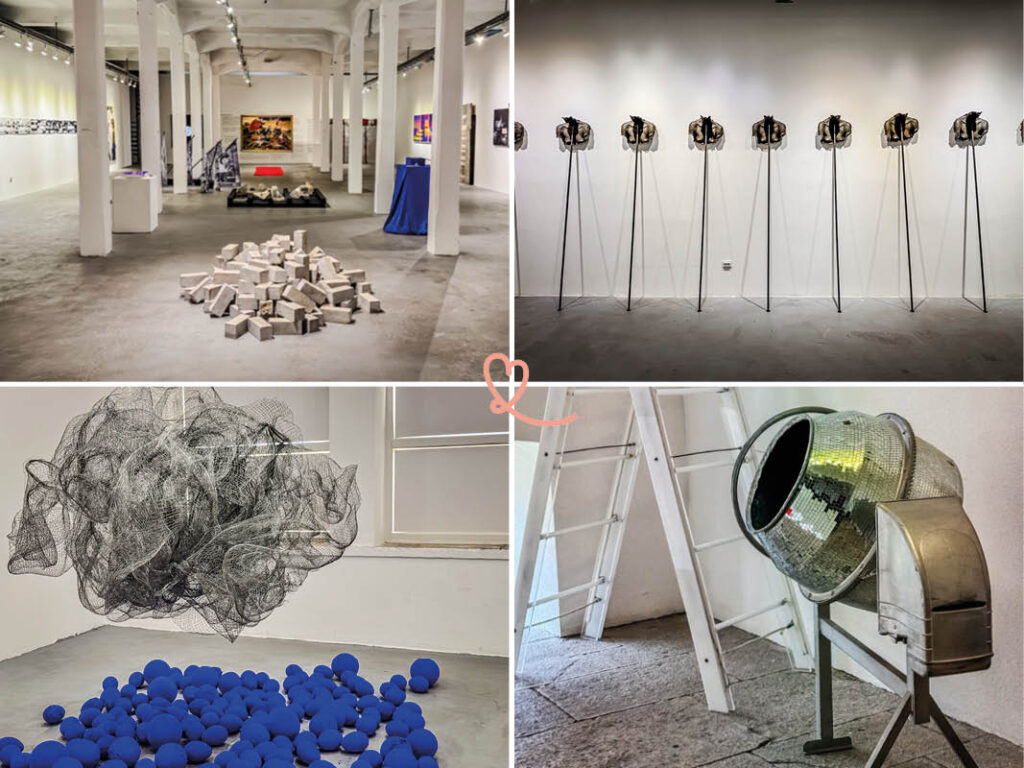
What we liked most about the Museum of Contemporary Art in Pula was the richness and variety of the works on display. Some installations particularly impressed us, such as
But beyond the artworks, we really appreciated the architecture of the museum itself. The combination of the old building and the clean volumes of the contemporary fittings creates a luminous and inspiring atmosphere.

WHERE TO STAY IN Pula
Our favorites: neighborhoods and hotels
Our selection is coming soon Hotel 1 – See prices, photos and availability
Our selection is coming soon Hotel 1 – See prices, photos and availability
Our selection is coming soon Hotel 1 – See prices, photos and availability

See our complete selection of the best hotels in Pula (coming soon)
History in brief
The Museum of Contemporary Art Istria (in Croatian, MSUI – Muzej suvremene umjetnosti Istre) is housed in Pula’s former printing works, a building of sober, spacious architecture.
It was designed to bring together works created from the second half of the XXᵉ century to the most recent artistic projects. It has become a reference point for the regional and international contemporary scene, offering a fine diversity of mediums depending on the exhibition: installation, video, painting, sculpture, audiovisual art. The temporary exhibition we saw (from Montenegro) is a good example of this. It demonstrates a poetics of stylistic pluralism, blending visual histories, digital-technological influences and historical references.

DISCOVER Pula
- Attractions in Pula (coming soon)
- Best hotels (coming soon)
- Best restaurants (coming soon)
Access: Museum of Contemporary Art, Pula
Where is the Museum of Contemporary Art in Pula?
- In downtown Pula,
- Close to TitoPark and the seafront,
- Within walking distance of Pula’s major attractions

Public transport access
If you take public transport, the “GRAD. KNJIŽNICA P&R “The nearest bus stop is the city’s public transport network. It’s less than 5 minutes’ walk away.
To plan your itinerary, we invite you to consult the route maps, timetables and fares here.

Access by car and parking
The museum does not have its own private parking lot. You’ll need to park in the nearby streets or in one of the public parking lots in the center of Pula. Be aware that during the tourist season, some parking lots near Parc Tito or around the historic center fill up early.
We recommend Parking Karolina, a 2-minute walk from the museum.

OUR ADVICE FOR RENTING YOUR CAR AT Croatia
- Compare prices on our preferred platform: DiscoverCars – one of the best rated sites.
- Choose a car that is powerful enough (the roads are steep) but compact (some passages are narrow).
- There is a lot of demand, book it early.


See our tips (coming soon)
Useful tips: duration, schedules, eating…
Best time to visit
Perhaps you’d prefer a visit in the morning, to get the first taste of the spaces and be quieter. However, we visited the museum in the late morning in the spring and were alone.

Length of visit and main difficulties
We estimate that it takes around 1 hour to visit both the permanent collection and the temporary exhibition in a relaxed atmosphere.
Difficulties:
- Cartels are not translated into English, only Croatian, which limits access to information.
- there are stairs up to the museum, which is on the first floor, and no elevator.

Advice on how to visit
We simply recommend that you let yourself be guided through the space by the works and your emotions. No particular direction is recommended.
A LITTLE MORE patience
All the photos, maps, information, good addresses to make your stay in Provence a success, will soon be gathered in a single ebook!
If you’d like to be notified when our Madeira guide is published, please subscribe:

Schedules and rates
- Opening hours:
- October to April: 10am – 7pm
- May: 10am – 8pm
- June to September: 10am – 9pm
- closed on Mondays and public holidays
- Price: €4
Check out the latest information on the museum’s website, here.

Catering
As the museum is located right in the center of town, you’ll have the chance to dine in one of Pula’s best restaurants before or after your visit!

Discover Pula’s Museum of Contemporary Art
An immersion in modern Croatian design

As we walked through the doors of the Musée d’Art Contemporain, we immediately felt an atmosphere of calm: the large volumes, the soft lighting and the scenography that allows each work to breathe appealed to us greatly. The museum knows how to provide visual breaks.
At the time of our visit, the temporary exhibition “Contemporary Art of Montenegro” occupied several rooms and demonstrated the extent to which regional creation is in dialogue with international trends, notably stylistic pluralism, media hybridization and social concerns.

We enjoyed the abstract pieces such as Kosmicki ritmovi (Milena Mijović Durutović) and the sound and video installations, which take time to reveal themselves. It’s a museum where we looked at the works several times to get a better grasp of them, and where we let ourselves be questioned. We found the scenography and information on each work ideal for those seeking to understand current trends without being drowned in information.

Subscribe to our Newsletter
- Get away from it all with Region Lovers’ beautiful destinations!
- Once a month
- Advertising-free

A place where heritage and modernity meet
We liked the contrast between the building (a converted former printing works) and the contemporary works it houses. The raw décor, with its light-colored walls and industrial openings, enhances the installations and gives them a special resonance.

Among the most striking was Jovana Vujović’s Befriending the Abyss, a monumental installation of 9 slender figures, which seemed to dialogue with the space itself. These dark, fragile silhouettes evoke human solitude and resilience, as if suspended between anchorage and disappearance.

A little further on, Zdravko Delibašić Beli’s Izolacija, a digital triptych with clean lines and cool hues, fascinated us with its way of translating contemporary isolation through an almost clinical minimalism. These powerful, introspective works find an extra dimension in this place steeped in history: they resonate with Pula’s industrial memory and the intimate questionings of our times.

Explore the collections and exhibitions
Discovering key works and emblematic artists

The museum offered us a fascinating panorama of Croatian and Balkan art of the 21st century. We found a great diversity of forms: installations, sculptures, videos… But above all, there is a common thread: a creative dialogue with the times, which you will find in both the permanent and temporary exhibitions.

Milena Mijović Durutović’s Kosmicki ritmovi fascinated us with its almost cosmic dimension, while Ana Aleksic’s Prvi san enveloped us in a dreamlike, immersive atmosphere. And how could we fail to smile at Leo Vukelic’s Disco mijesalica, a concrete mixer transformed into a flashy sculpture, at once homage and derision?

Through these works, you’ll discover powerful themes such as collective memory, identity, the link to the sea and the land, as well as humor and self-mockery. We had the sensation of exploring an art form that was free, lively and deeply rooted in its time.
Temporary exhibitions and experimental space

We really liked the dynamism of the Musée d’Art Contemporain, which regularly renews its exhibitions and gives a voice to artists from all over the region. The Montenegrin exhibition presented during our visit was a good illustration of this openness: plurality of styles, social commitment, visual and sound experimentation.

We took the time to walk through each room, some of them dark for the videos, others bathed in light for the sculptures. The space lends itself perfectly to contemplation and surprise. You’ll be invited to move around freely, to listen, observe and sometimes even participate. We found this freedom refreshing: a real contrast to more rigid museums.
The Museum of Contemporary Art in Istria is not a place where you fly over works of art, it’s a place where you live art, in all its forms and intensities.