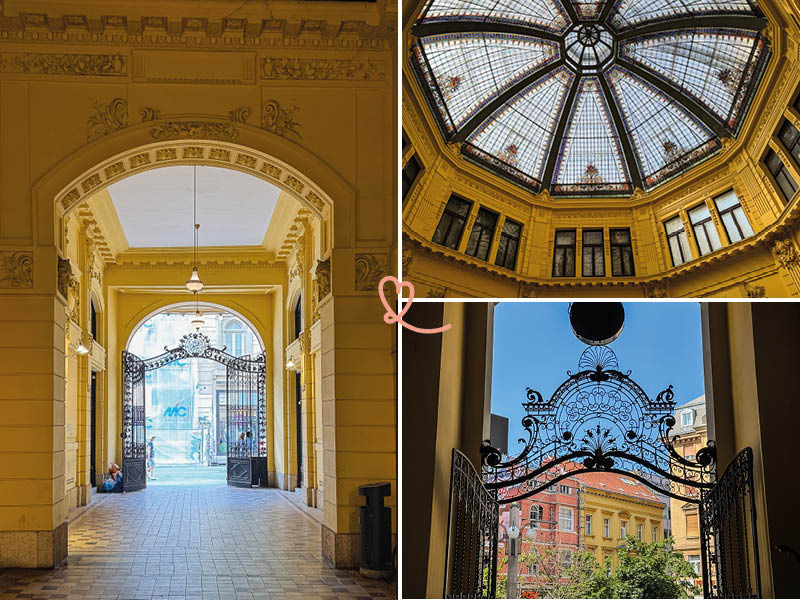
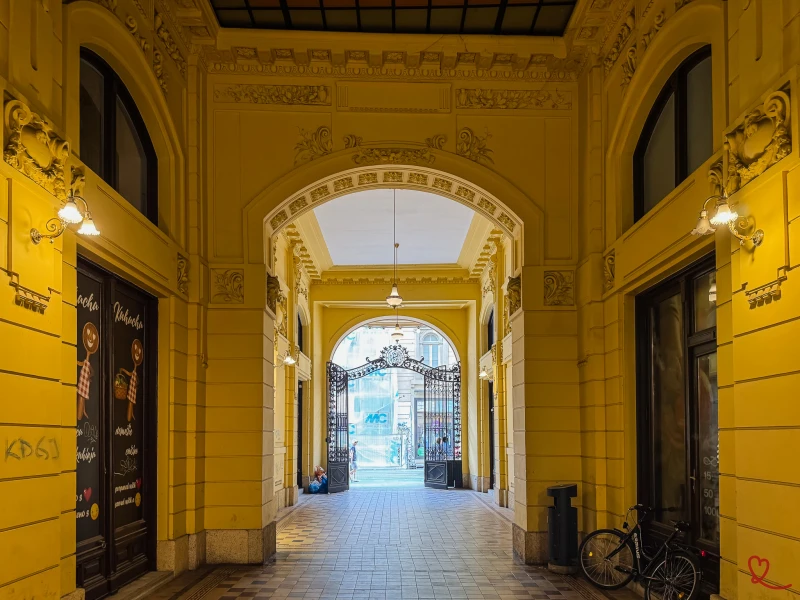
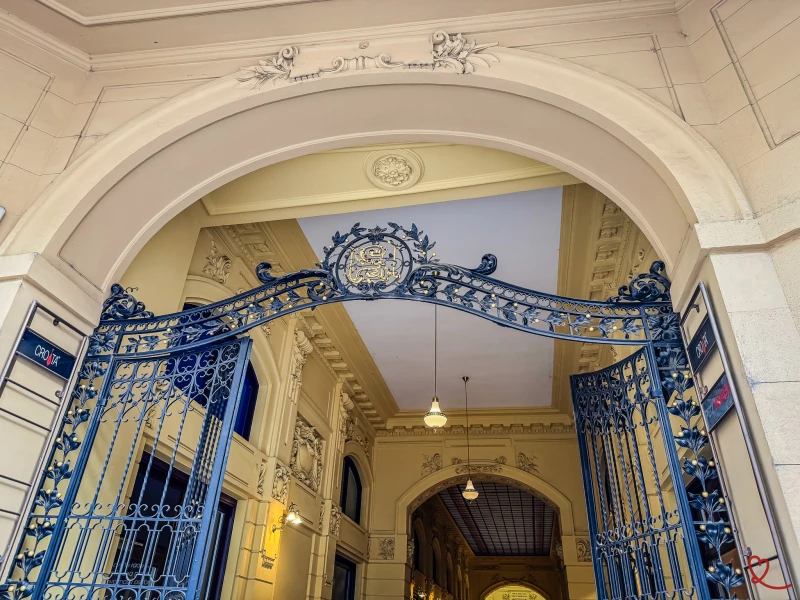
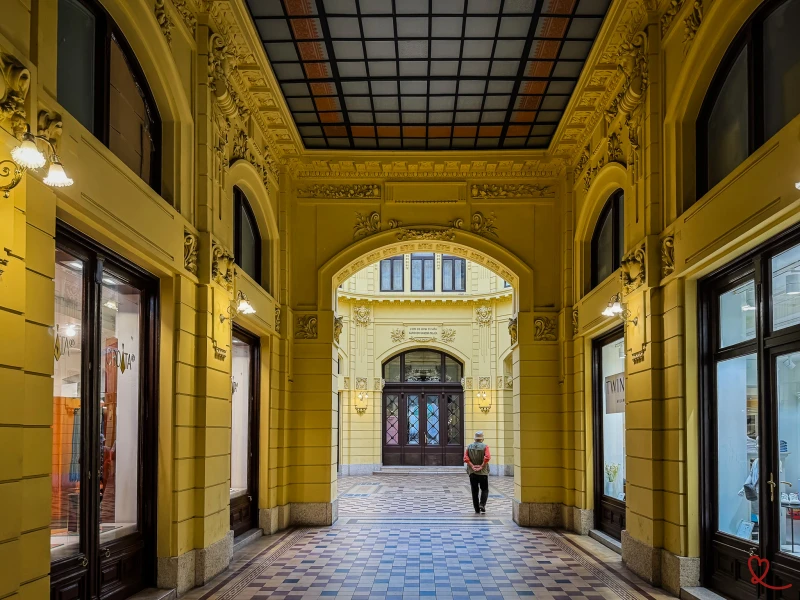
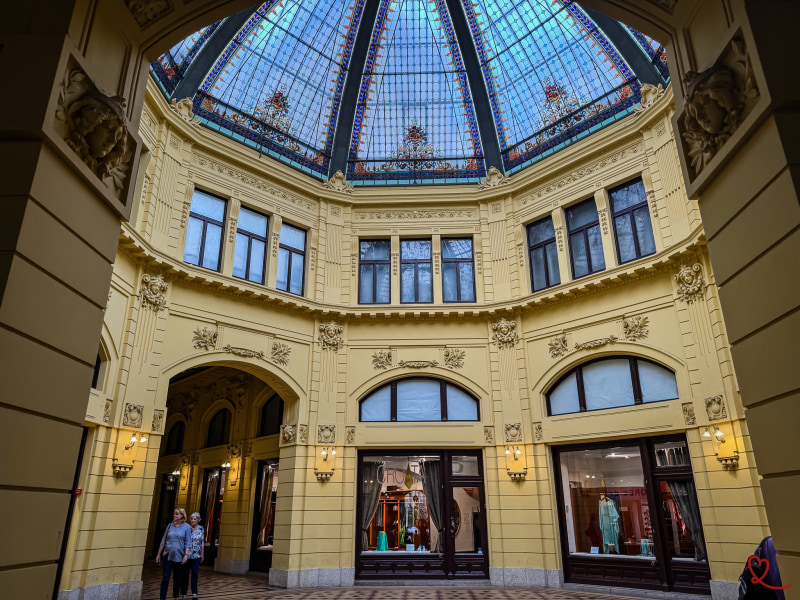
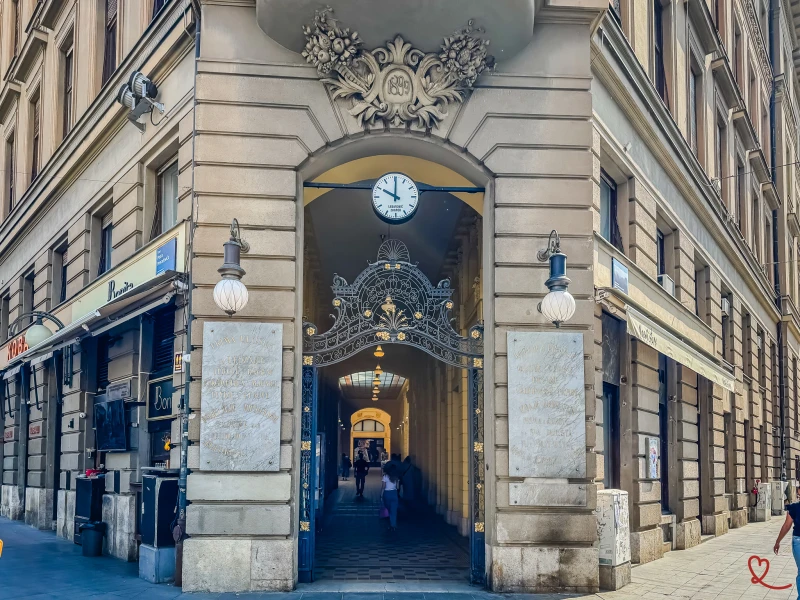
The Passage de l’Octogone hides a beautiful architectural surprise right in the center of Zagreb. Built in 1899 in pure Art Nouveau style, this commercial covered passageway catches the eye with its octagonal glass dome that naturally illuminates the premises. We immediately noticed the meticulous details: the sculpted ornamentation on the facades, the wrought-iron gates and the geometrically patterned floor tiles. A little architectural gem worth a detour on your stroll through the city center.
In this article, you’ll find some useful tips to help you prepare for your visit and make the most of this architectural gem in the heart of Zagreb.
This opinion is completely independent, based on our experiences. We made our own choices, visited the area anonymously, and paid our bills in full.
Why visit Passage de l’Octogone
Is passing through the Octagon worth it? Our opinion:
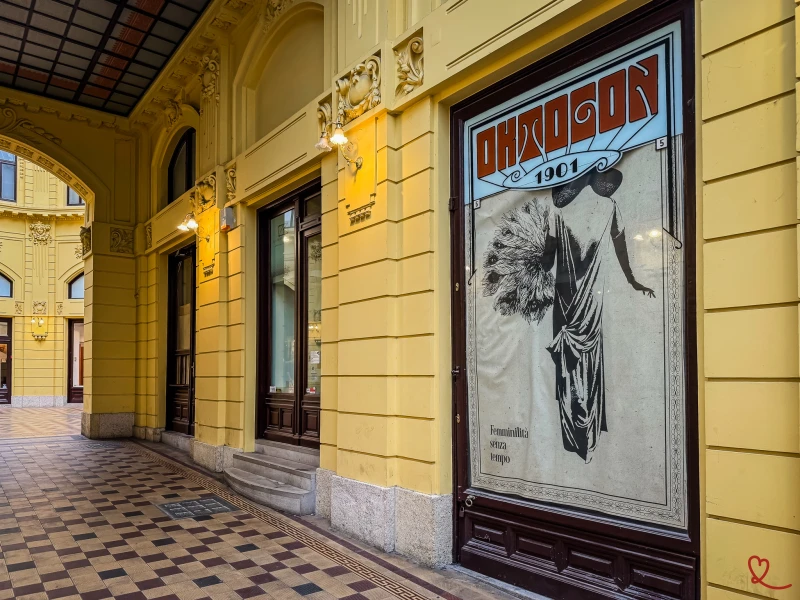
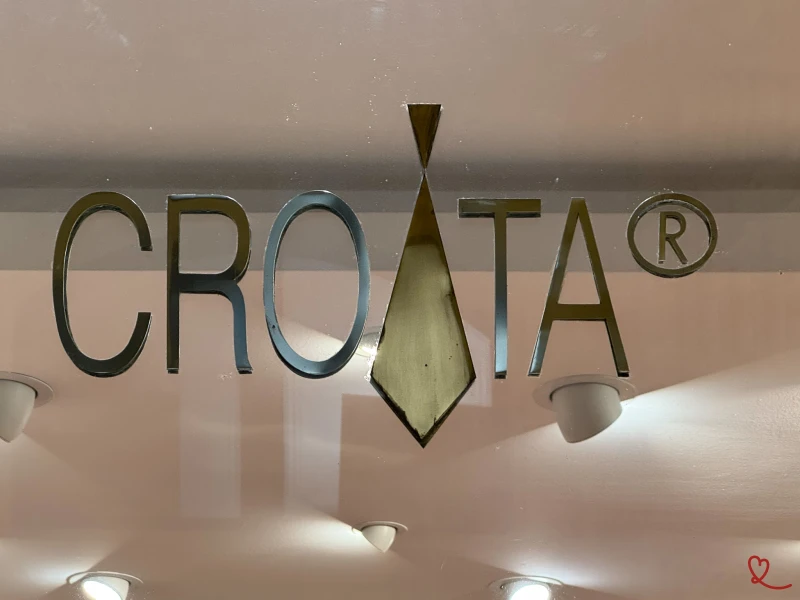
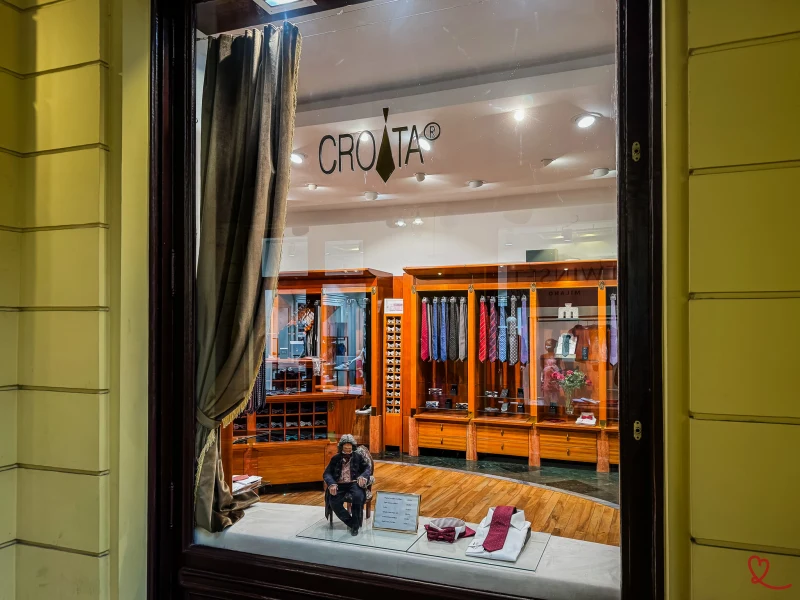
Beyond its remarkable Art Nouveau architecture, the Passage de l’Octogone lives to the rhythm of Zagreb shopping. Under its luminous glass roof, a dozen boutiques blend local elegance with artisanal know-how: the Croata store displays its top-of-the-range ties (Croatia is the cradle of the tie!), while Kobali, a renowned master hatmaker, exhibits his creations. Beneath its sculpted ornamentation, this covered passageway remains a popular meeting place for Zagreb residents and visitors alike. A great place to shop in a refined atmosphere, right in the heart of the historic center. In our opinion, it’s one of Zagreb’s finest experiences.

Why is Passage de l’Octogone famous?
The Passage de l’Octogone embodies Zagreb’s urban transformation at the end of the 19th century. Designed in 1899 by architect Josip Vancaš, it originally linked the First Croatian Savings Bank to Ilica Street. A symbol of the financial power of the time, it is now a popular pedestrian shortcut for Zagreb residents. Its octagonal glass dome remains one of the city’s most beautiful Art Nouveau structures.
We didn’t see any, but the passage regularly hosts photo exhibitions and small acoustic concerts taking advantage of the excellent resonance under the dome. An amusing detail: the locals simply call it “Oktogon” and meet there as a central landmark between the upper and lower town.

Our favorite moments
During our visit, we particularly liked :
- The octagonal glass dome: natural light flooding the space creates a unique, warm atmosphere under this transparent roof.
- Artisan boutiques: We were impressed by the quality of the products, including Croata’s high-end ties and Kobali’s elegant hats.
- Architectural details: wrought-iron doors and sculpted reliefs add a touch of elegance and history to every step.

History in brief
- Built in 1899 as part of the First Croatian Savings Bank project.
- Designed by architect Josip Vancaš, a pioneer of Art Nouveau architecture in Zagreb.
- A former banking area has become a fully-covered pedestrian walkway.
- Until 2013, it housed a bas-relief dedicated to Pluto, a stray dog and companion of the workers.
- A transition point between Ilica Street and Petar Preradović Square, in the heart of the historic center.
- Renovated and kept in good condition, it regularly hosts exhibitions and cultural events.
Access: Passage de l’Octogone, Zagreb
Where is Passage de l’Octogone?
- Located in the heart of Zagreb, in the Donji Grad district, the Lower Town.
- Precise address: 5 rue Ilica, 10000 Zagreb, Croatia.
- The passage connects Ilica Street to Petar Preradović Square, also known as Cvjetni trg.
How to get there?
- Passage de l’Octogone is just 200m from Josip Jelacić Square, at the foot of the Old Town.
- Several streetcar and bus lines serve the square within a 5-minute walk.
- The passage is also less than 5 minutes’ walk from Zagreb’s famous funicular railway.

Parking
- Passage de l’Octogone does not have a dedicated parking lot or reserved parking spaces for people with reduced mobility.
- The nearest parking is at Garaža Cvjetni, 300m away, at 13 Varšavska Street, Zagreb.
OUR ADVICE FOR RENTING YOUR CAR AT Croatia
- Compare prices on our preferred platform: DiscoverCars – one of the best rated sites.
- Choose a car that’s compact enough (some passages are narrow).
- There is a lot of demand, book it early.


Useful tips: duration, schedules, eating…
Best time to visit
The Passage de l’Octogone is particularly pleasant to visit on a sunny day, to enjoy its glass dome bathed in natural light. On weekends, especially Saturdays and Sundays, the place is livelier, but not very busy.
Length of visit and main difficulties
- Allow 10 minutes for a quick tour, and up to 1 hour if you’d like to wander around the stores and exhibitions.
- The passageway is fully covered and 100% wheelchair-accessible.

Advice on how to visit
We began our tour of the passageway from Rue Ilica to admire the Art Nouveau architecture and the central octagon. We could see the wrought-iron doors and sculpted ornaments under the glass roof. After a bit of window-shopping, the route naturally led us to Place Petar Preradović.
Visiting with children
- Passage de l’Octogone has no dedicated play areas, but children can be captivated by the interactive Zagreb Treasure Hunt game that includes this location. Find out more here.
- The passageway is accessible to baby carriages and offers a calm, safe environment, ideal for a family outing.
- The stores offer handicrafts to arouse their curiosity.

Schedules and rates
- The passage is open during the opening hours of downtown businesses.
- Opening hours are aligned with those of the boutiques, generally from 9am to 8pm.
- Access is free of charge.
Guided tours
The Octagon Passage is not always included in guided city tours. However, you can book a personalized tour of Zagreb and ask your guide to include the passage in your itinerary. See prices, photos and availability.
Catering
We noted that there was a fast-food outlet in the passageway, on the Place Preradovic side. Unfortunately, it was closed at the time of our visit.
Iconic architecture in the heart of Zagreb: Art Nouveau revealed
An art nouveau aesthetic enhanced by the glass roof
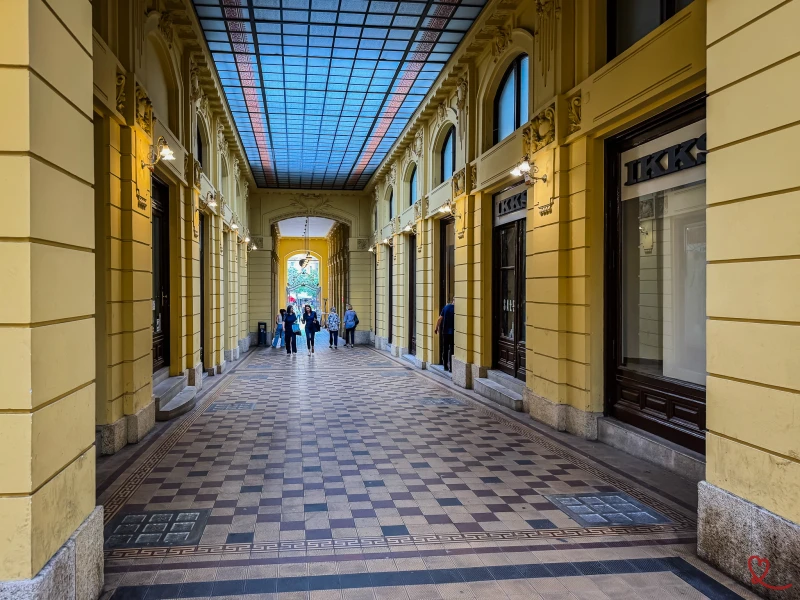
As soon as we entered, the light enveloped us. The large glass roof immediately catches the eye and illuminates the entire passageway. The slender, elegant metal structure gives the impression that everything is floating above your feet. The art nouveau lines create an almost hypnotic graphic effect.
Sculpted ornamentation and elegant street views
The walls discreetly tell the story of the Zagreb of yesteryear: moldings, medallions, floral motifs… Each detail reinforces the identity of the passageway without ever weighing it down. The aligned perspectives towards the surrounding streets made us want to explore even further. This is architecture that accompanies the stroll rather than imposes itself.

The central octagon: a light-filled circulation space
Arriving at the heart of the passage, we had the impression of entering a small interior square. The octagonal space opens up and changes perception: more air, more height, more resonance. You get the feeling that this crossroads has been designed to be a breathing space in the city, a place where you can take your time before choosing which street to continue down.

A LITTLE MORE patience
All the photos, maps, information and addresses you need to make your stay in Croatia a success will soon be available in a single ebook!
A shopping experience combining local elegance and traditional craftsmanship
Croata: Croatian excellence in high-end ties
In the heart of the Passage de l’Octogone, Croata boutique embodies local elegance with its high-end ties. We were seduced by the authentic quality of the fabrics and the finesse of the motifs, reflecting remarkable Croatian know-how. Croata is part of a shopping experience that blends local elegance with traditional craftsmanship.
A targeted selection of traditional jewelry and local handicrafts
Passage de l’Octogone is home to several boutiques dedicated to traditional Croatian jewelry: fine filigree, motifs inherited from regional costumes, timeless designs. You’ll sense a deep attachment to the country’s artisan roots. It’s a stopover that appeals as much to art lovers as to those who, like us, are looking for an authentic souvenir.

A local master craftsman: Kobali, a symbol of elegance
At Kobali, you’ll discover a whole universe: straw, felt, wool, classic or more daring shapes… Every hat has character. The craftsmanship is palpable when you handle the models. This boutique gave us the impression of entering a workshop where artisan traditions live on in elegant, perfectly-tailored creations.

Subscribe to our Newsletter
- Get away from it all with Region Lovers’ beautiful destinations!
- Once a month
- Advertising-free

Frequently asked questions
Who is Pluto the dog?
According to oral tradition, Pluto was a stray dog who followed the workers during the construction of the passage and became the site’s mascot. He was represented in the form of a small bas-relief that paid tribute to his loyalty. This story, part legend, part urban anecdote, has long been a source of curiosity for passers-by. However, the bas-relief was removed in 2013, reinforcing its status as an enigma. Many still talk about it, but few can say exactly where it was.
Was the central octagon designed for a mystical reason?
Some fans of sacred geometry like to think that the octagonal shape evokes a transition between the earthly world (the square) and the celestial world (the circle). Although the architect never mentioned any esoteric intention, this theory amuses visitors and continues to fuel discussion, contributing to the passage’s mysterious aura.