Nestled within 17th-century fortifications, Split’s Croatian Maritime Museum promises a fascinating immersion in Croatia’s maritime heritage. Housed in the Gripe Fortress, this museum combines history and interactivity for a visit rich in discovery. We were particularly impressed by the collection of historic torpedoes and model ships. The virtual reality experience, including underwater diving, adds a fun, immersive dimension, ideal for young and old alike.
In this article, you’ll find some useful tips to help you prepare for your visit to the Maritime Museum.
This opinion is completely independent, based on our experiences. We made our own choices, visited the area anonymously, and paid our bills in full.
Is the Maritime Museum of Croatia worth it? Our opinion:
Yes, the Croatian Maritime Museum in Split is well worth a visit. Housed in the Gripe Fortress, a 17th-century historic monument, it offers a unique and authentic setting. Its rich and varied national collection on Croatia’s maritime heritage is impressive. This museum is a must-see for anyone interested in understanding the region’s maritime history. It’s one of Split’s top attractions.
What we particularly liked:
- An interactive and immersive scenography, including a virtual reality experience on scuba diving.
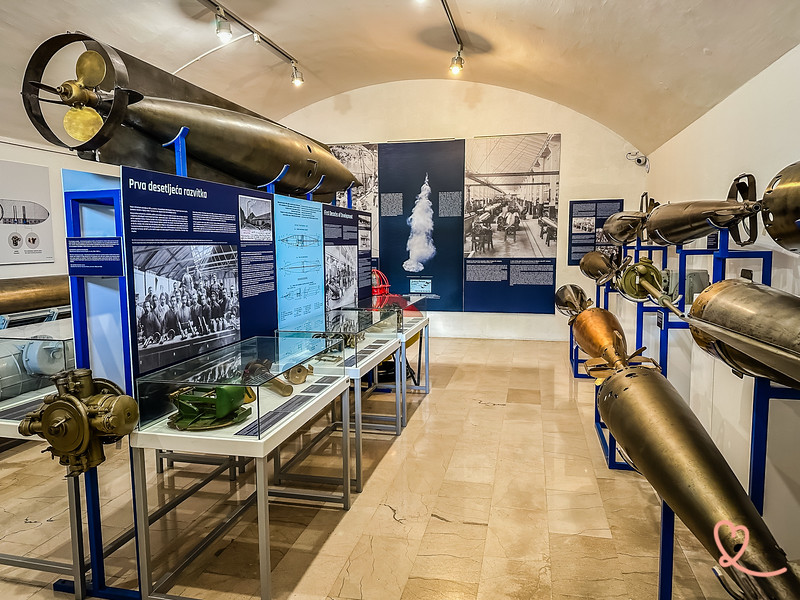
- Rare items such as the world’s oldest torpedo dating from 1866.
- An outdoor area where you can see historic boats and maritime weapons.

Why is the Croatian Maritime Museum famous?
This museum is renowned for its thematic collection focused on Croatia’s maritime heritage. It houses unique historical artifacts, such as the world’s oldest torpedo, dating from 1866, as well as superb wooden ship models and vintage boat engines. Housed in the Gripe Fortress, a major cultural site in Split, the museum enjoys an exceptional historic setting.
Founded in 1925, it highlights the importance of the region’s maritime heritage and offers an educational and immersive experience.

Our favorite moments
During our visit, we were particularly struck by several experiences:
- Climb aboard the Bakar steamer on display in the garden.
- Dive into the depths of the sea with our virtual reality experience, a highly successful sensory immersion ideal for young and old alike.
- Observe the impressive torpedoes, including the oldest example in the world, which fascinated us with its rarity and history.

WHERE TO STAY IN Split
Our favorites: neighborhoods and hotels
Marina –
Hotel Ambasador – check photos and availability
Old Town –
Piazza Heritage Hotels – check photos and availability
Bacvice, on the coast –
Hotel Park Split – check photos and availability

Access: Croatian Maritime Museum, Split
Where is the museum?
- In Split, Croatia
- West of the historic center
- At 18 Glagoljaša Street
- Inside Gripe Fortress
- 10min walk from the Golden Gate of Diocletian’s Palace
- 10min walk from Split’s St. Domnius Cathedral
How to get there?
Access is via Rue Glagoljaška, a narrow road for cars, so drive slowly if you have a car. The entrance to the museum parking lot is marked by a cannon and a double iron gate.
The museum can also be reached directly on foot from Split’s historic center in 15min, but the route is quite steep as it nestles in an ancient fortress overlooking the city. Alternatively, the VUKOVARSKA – MANUŠ and PAZAR 2 bus stops are less than a 7min walk away. Find out about public transport timetables here.

Parking
The museum has its own parking lot inside the fortress. The access road is narrow and the entrance passage is low-ceilinged. Take precautions to avoid scratching the roof of your car.

OUR ADVICE FOR RENTING YOUR CAR AT Croatia
- Compare prices on our preferred platform: DiscoverCars – one of the best rated sites.
- Choose a car that’s compact enough (some passages are narrow).
- There is a lot of demand, book it early.


Useful tips: duration, schedules, eating…
Best time to visit
The Croatian Maritime Museum can be visited all year round, with no real crowds. July and August are the busiest summer months. Weekends, especially Saturdays and Sundays, attract more visitors. For a quieter visit, it’s best to visit on a weekday, at any time of day, as the museum is not very busy.

Length of visit and main difficulties
Allow 1 to 2 hours for a complete visit.
Clean, wheelchair-accessible toilets are located near the entrance, in the first room after the ticket office. The museum is accessible to people with reduced mobility, but note 3 steps at the entrance and an outdoor area with uneven cobblestone flooring.

Advice on how to visit
Start in the room to the right of the reception area, then work your way around the other rooms. Return to the reception area to visit the space on the left. Finish outside, where ships and weapons are on display. The tour is free and well signposted, with a map on your entrance ticket for easy orientation.

Visiting with children
The museum is ideal for children aged 5 and over. They’ll love the virtual reality experience of diving under the sea, the touch screens at child height, and the chance to climb aboard a real ship. A changing table and stepladder are also available. The fun, interactive atmosphere will delight young and old alike, with activities designed for the whole family.

Schedules and rates
The museum is open all year round, Monday to Friday, 9am to 7pm. Saturdays from 9am to 5pm, and Sundays from 10am to 5pm. Closed on January 1, January 6, April 20 and 21, May 1, May 30, November 1, November 18, December 25 and 26 – official website here.
A full-price ticket for adults costs €3.50, and €0.70 for children aged 5 to 7. With the SplitCard, save 50% on your museum ticket. This tourist card offers Split visitors discounts, free entry and advantages at partner museums, transport, restaurants and attractions – more info here.

Catering
The museum does not have an on-site dining area.

Immersion in the Croatian maritime world
Deep-sea diving with a virtual reality experience
Right from the start of your visit to the Croatian Maritime Museum, a virtual reality experience invites you to plunge into the depths of the sea. This immersive activity offers a striking visual projection that transports young and old into the underwater world. Donning a helmet and controller, you slip into the shoes of a professional diver as you move around a shipwreck. The 360°C images and visual effects enhance this immersion, making for a truly captivating dive!

Sea travellers’ gear
The museum’s permanent collection reveals the material world of Croatian sailors through a wide range of exhibits. You’ll discover impressively realistic ship models, period uniforms – including the astonishing outfit of a deep-sea diver – and mechanical objects, mainly engines, that bear witness to Croatia’s rich maritime heritage. Among the curiosities that caught our eye was an unusual suitcase containing a portable dressing table with built-in ironing board! This object belonged to the wealthy classes, who could travel simply for pleasure. A surprising and ingenious invention, don’t you think?

Major historical events at sea
The Croatian Maritime Museum, housed in the Gripe fortress, places particular emphasis on the Battle of Vis in 1866. This major naval confrontation is illustrated by remarkable paintings that immerse visitors in the strategy, battles and heroism of Croatian sailors at the time. The works on display testify to the historical importance of this event and its central role in the region’s maritime heritage.

At the same time, the museum deals with more recent episodes that have left their mark on the Adriatic Sea. The sinking of the ship Brigitta Montanari in 1984, which spilled 1,300 tonnes of toxic substances, is a reminder of the fragility of the maritime environment. The creation of the Croatian Navy in September 1991, meanwhile, marks an essential turning point in Croatia’s military and maritime history, illustrating the continuity and evolution of the country’s naval tradition.

Torpedoes and the arsenal of the seas
The richness of Croatia’s maritime heritage is also revealed through a remarkable collection of naval weapons. Among the exhibits, torpedoes in particular captivate visitors, including the oldest example in the world dating from 1866, a true testament to the military ingenuity of the time. The museum also displays guns, cannons and other military equipment used at sea, illustrating the technical and strategic know-how developed along the Adriatic coast.

A LITTLE MORE patience
All the photos, maps, information and addresses you need to make your stay in Croatia a success will soon be available in a single ebook!

Journey through ships and fortifications
Boarding the Bakar steamer
A visit to Split’s Croatian Maritime Museum isn’t limited to the exhibition halls. It continues outside! You can board the Bakar steamer, the jewel in the crown of the collection, and discover steam navigation from the inside. This direct contact with the ship allows you to better understand its historical role and the importance of boats in Croatia’s maritime heritage. It’s a unique experience to feel the texture of wood and metal under your hands and immerse yourself in the atmosphere of a bygone era. In the garden, you’ll also discover other exhibits, including some impressive naval weapons.

A contemplative stroll through Gripe Fortress
The Gripe Fortress, built in the 17th century, is one of Split’s most emblematic cultural monuments. It houses the Croatian Maritime Museum in a well-preserved architectural setting, telling the story of the region’s military and maritime history. As you stroll along the ramparts, you’ll enjoy breathtaking views of the city’s rooftops and the Adriatic Sea. The contrast between the solidity of the stones and the softness of the sea panoramas offers both a visual and sensory experience. Visiting the museum in this historic setting provides a double immersion experience, combining discovery of the collections with a fascination for the defensive architecture, where past and present interact harmoniously.

History in brief
Founded in 1925, the museum initially grew alongside Split’s Military and Naval Museum and various independent maritime collections, including those devoted to underwater archaeology and local shipbuilding. In 1997, the City of Split officially created the Croatian Maritime Museum, bringing these heritages together in a single institution. Its mission is to study, preserve and promote the rich maritime heritage of the Adriatic coast, from prehistory to the present day. The museum is housed in the Gripe Fortress, a perfectly preserved 17th-century monument to Split’s defensive history.